The Long Way, On Purpose
A look at randonneuring, where endurance meets reflection.

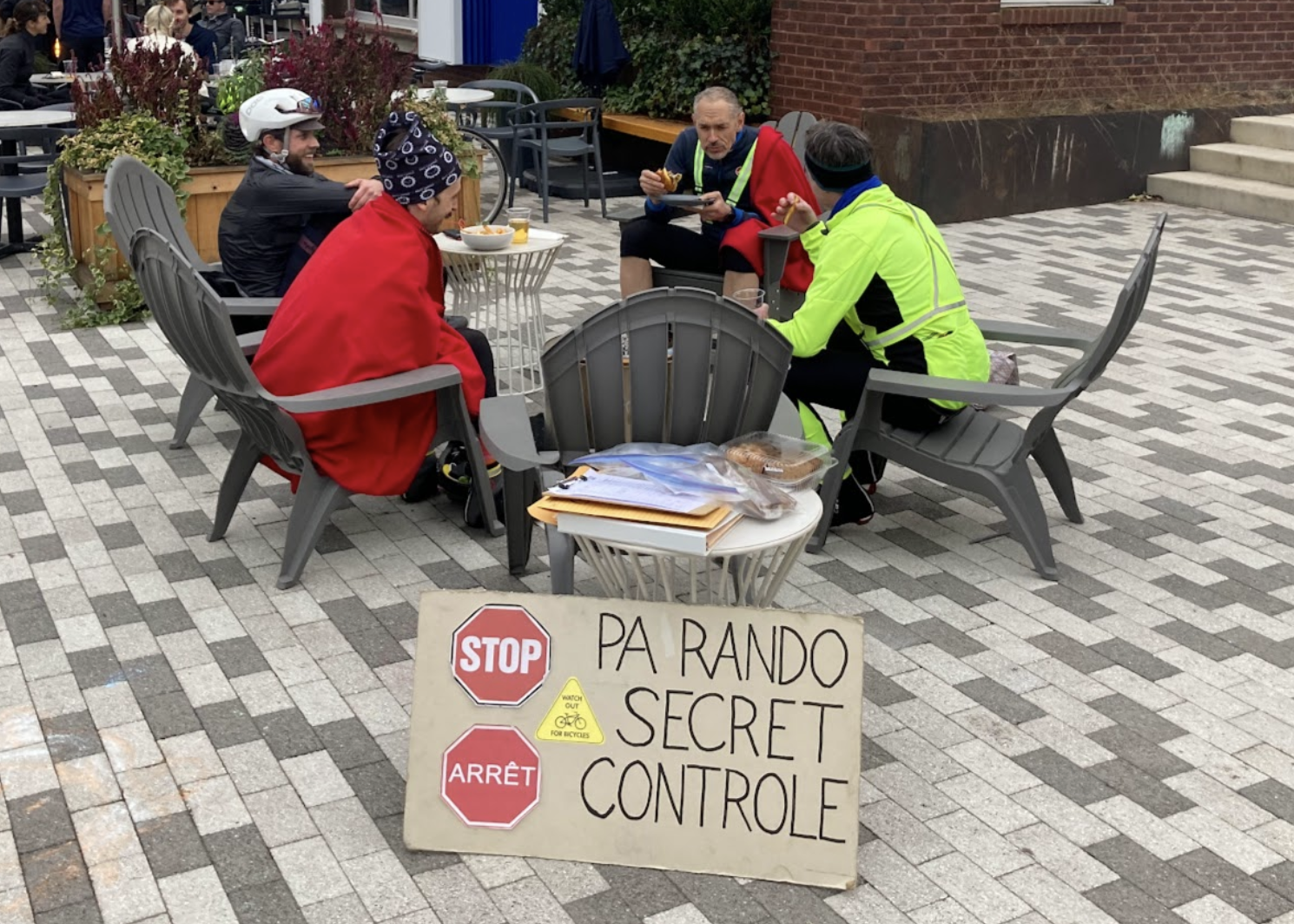
Randonneuring (a.k.a. “rando” for short) is a style of non-competitive, long-distance cycling that emphasizes self-sufficiency, steady progress, and riding within time limits rather than clocking the fastest time. Routes are fixed and distances are standard: rides from 100–199K are called populaires, while rides of 200K and beyond are known as brevets. Each ride follows a set course and includes designated controls—checkpoints such as convenience stores or cafés—where riders verify their progress. Riders receive a brevet card to use for verification. Controls serve a practical purpose: they mark distance, facilitate pacing, and provide opportunities to rest, refuel, and recalibrate.
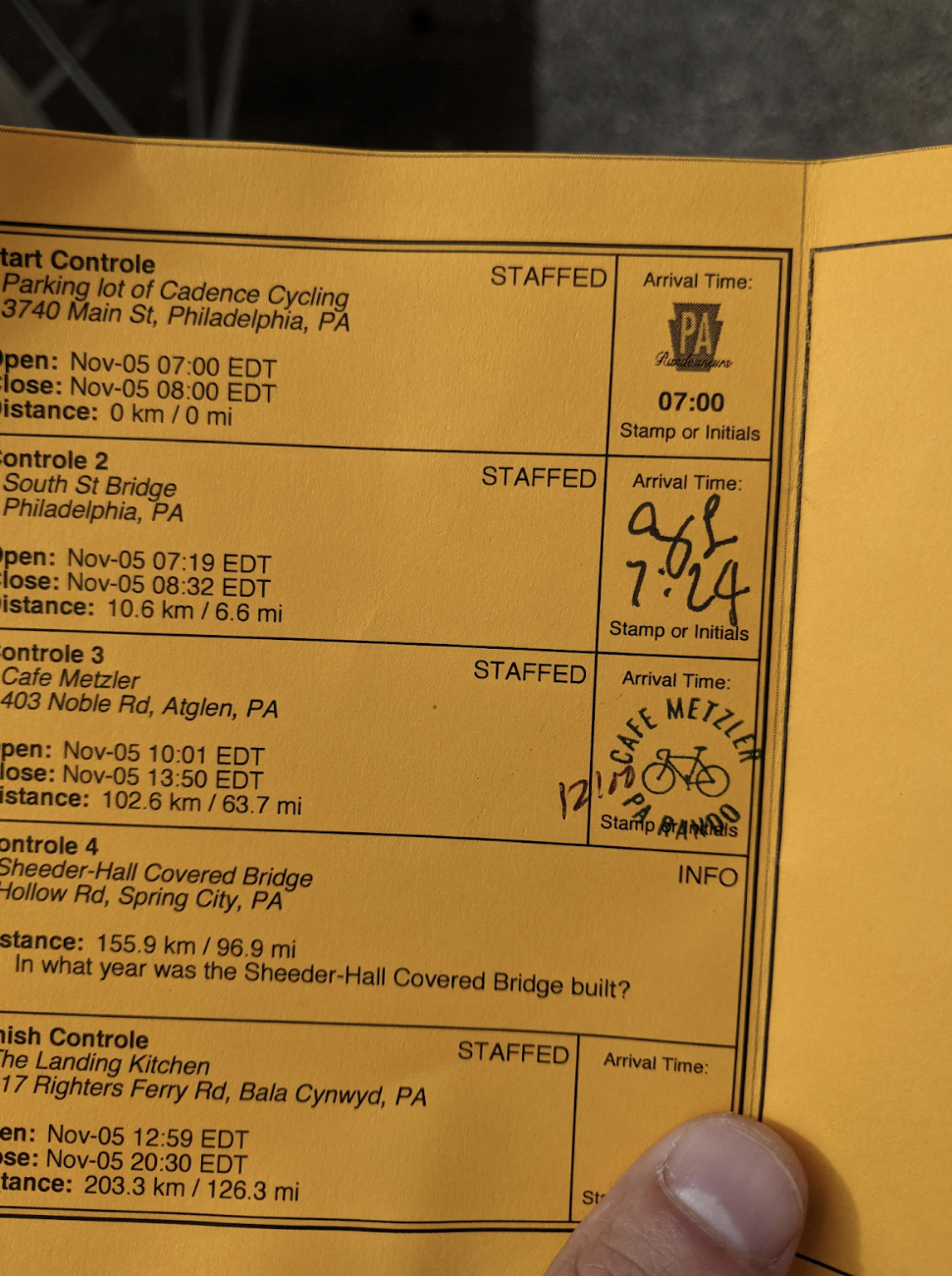
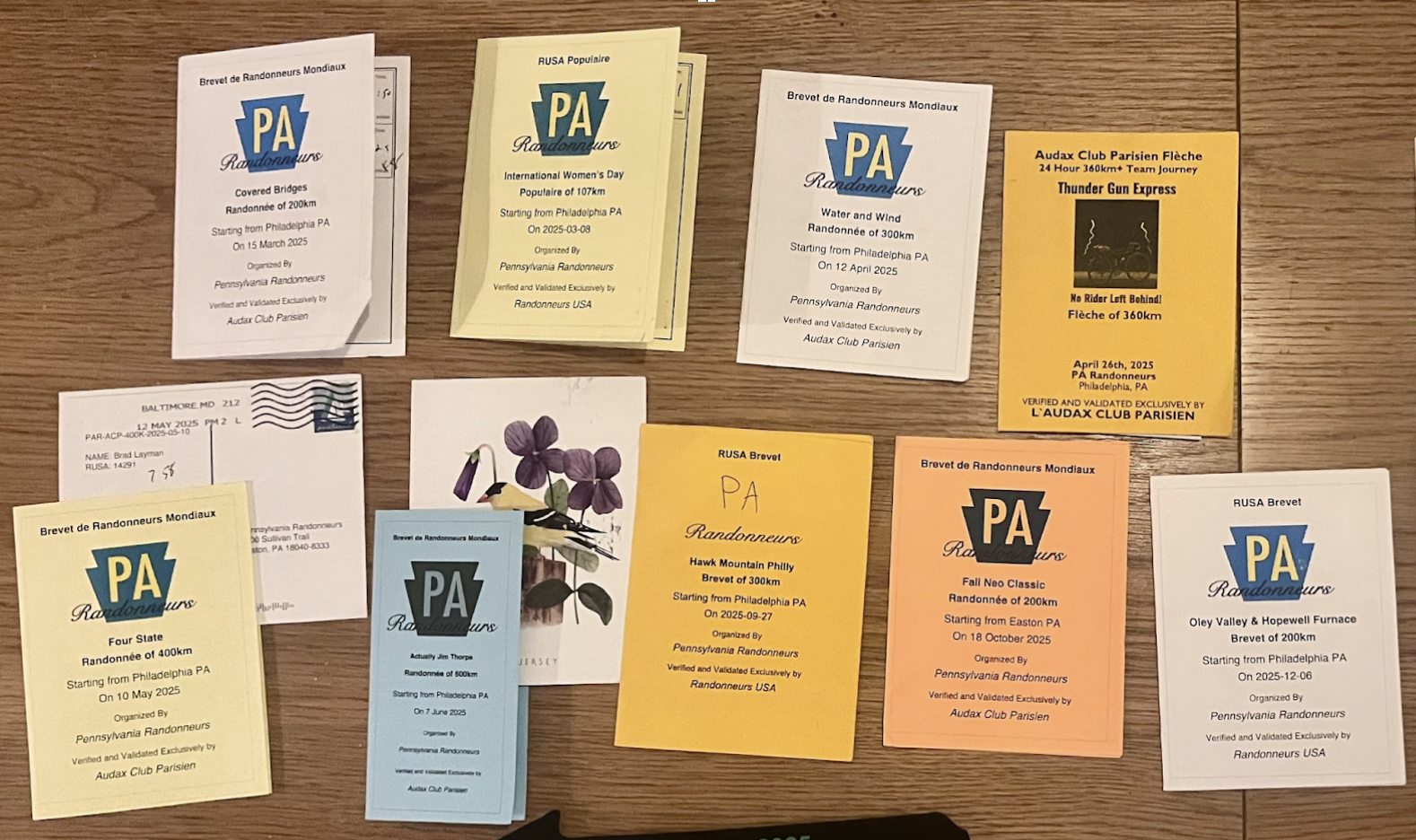
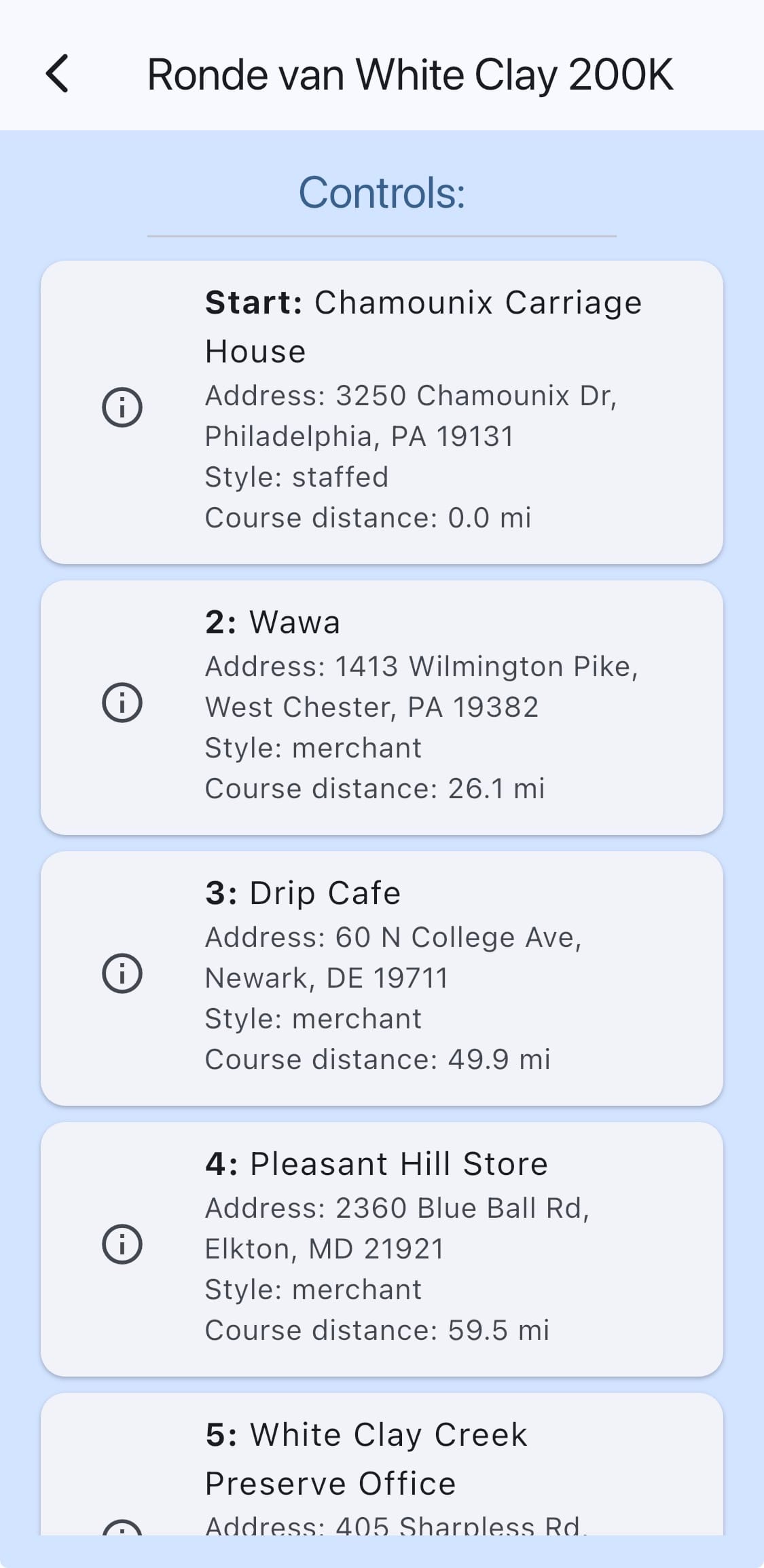
Left to right: a stamped brevet card; a collection of brevet cards from 2025; eBrevet app, a digital alternative to the traditional brevet card
While randonneuring isn’t a race, time matters. Every distance has a maximum allowed time. For example, a 200K has a time limit of 13.5 hours, with longer limits scaling accordingly. Success depends less on speed than on judgment: managing effort, planning stops, and adapting when conditions change.
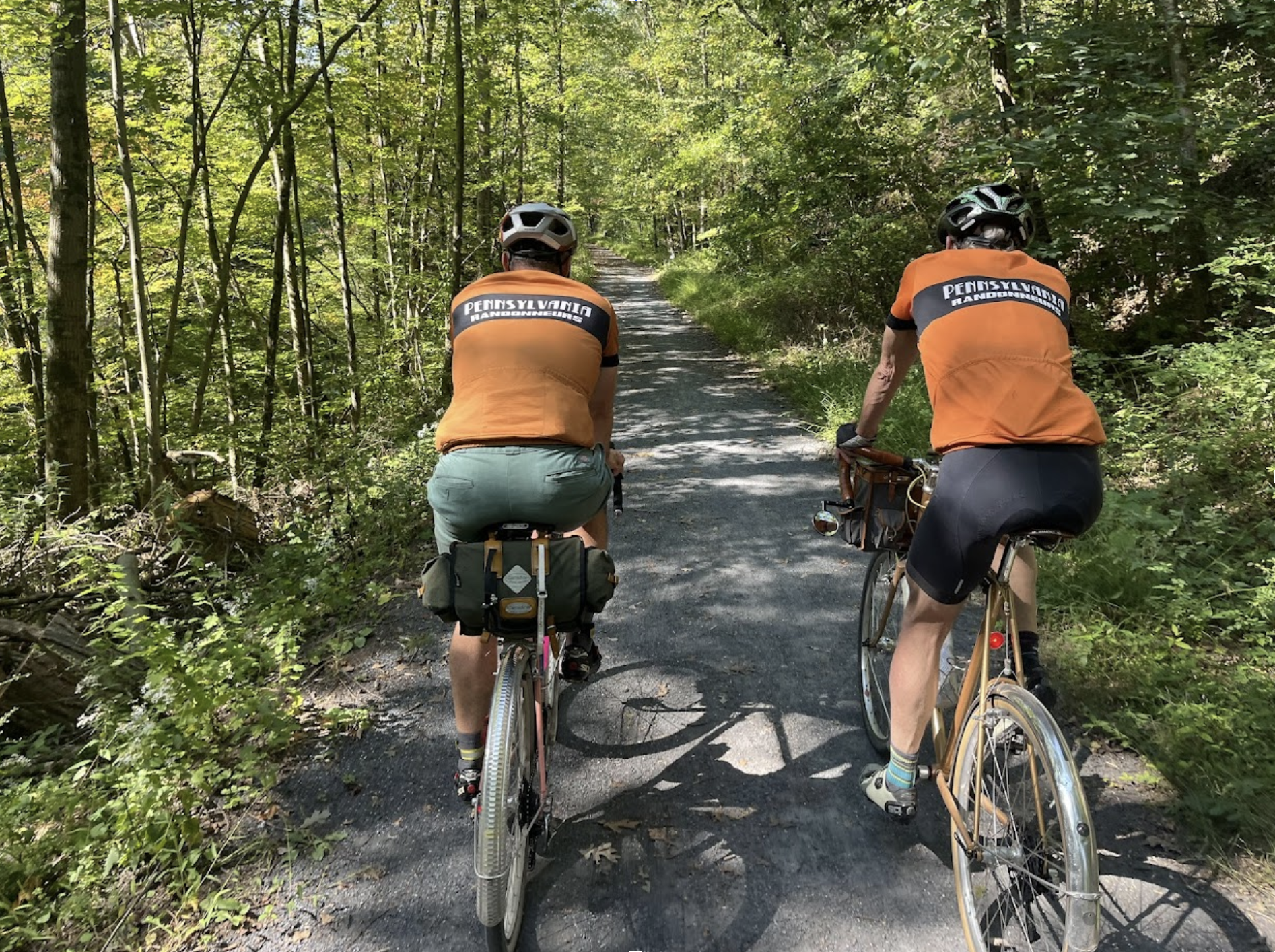
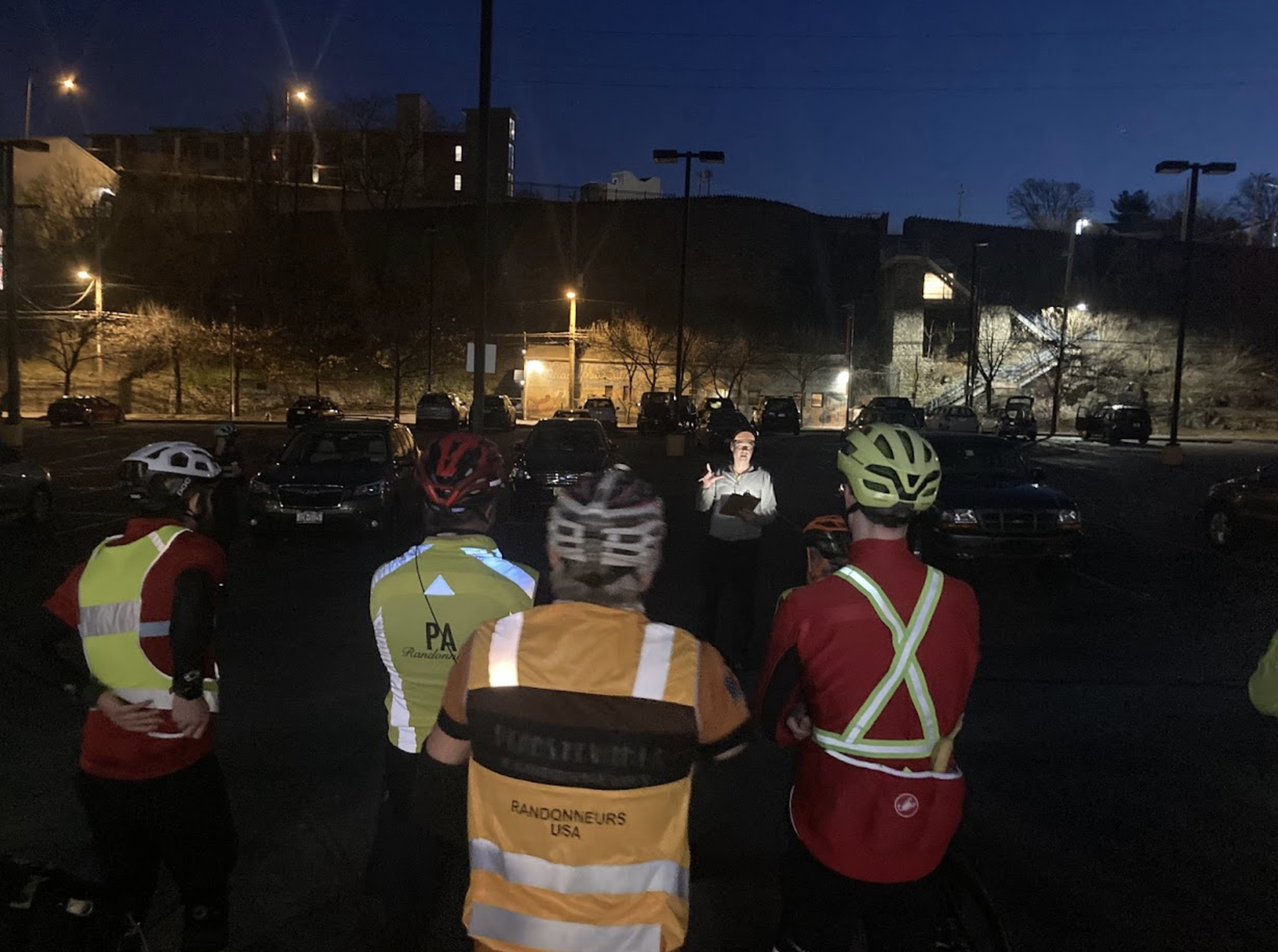
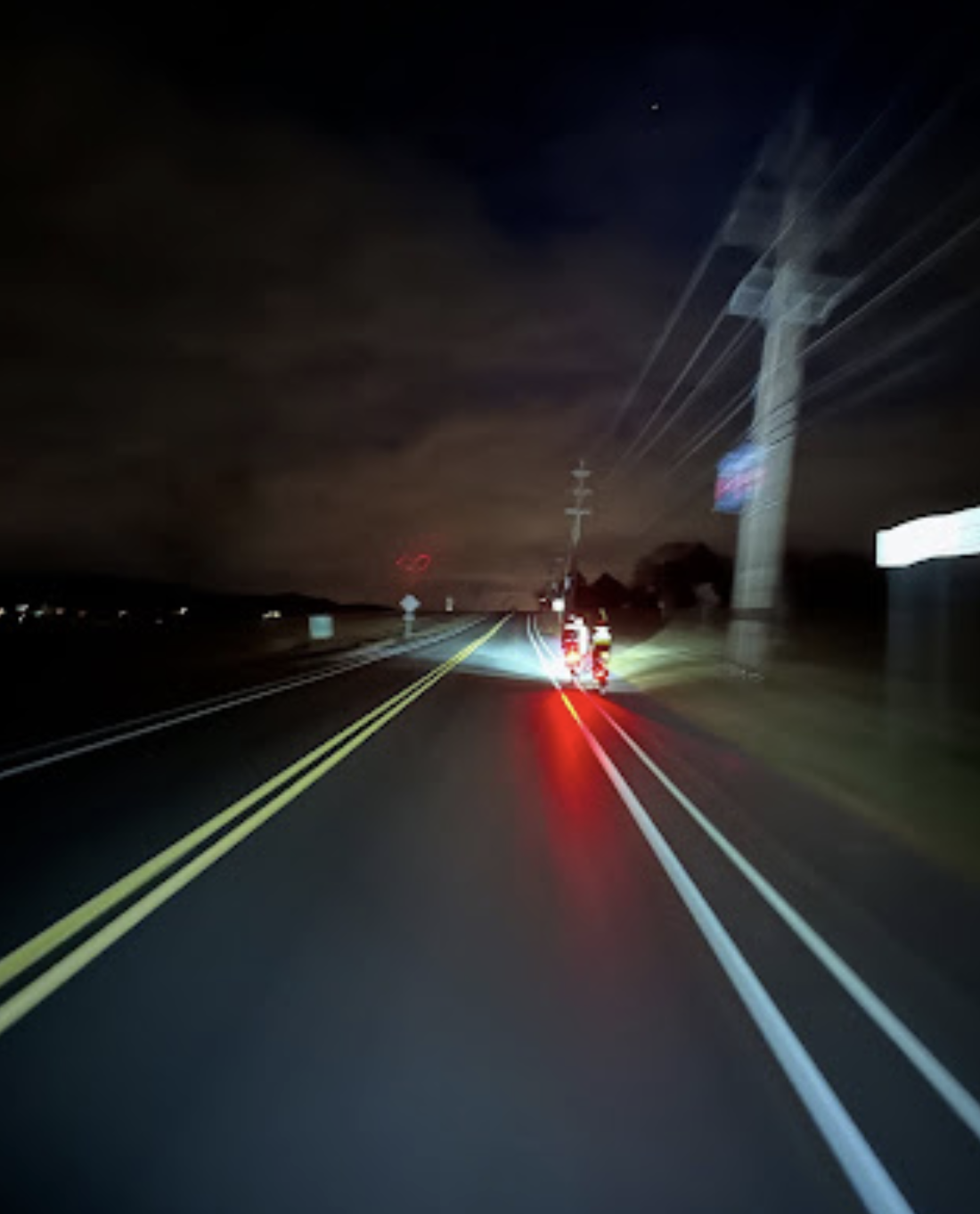
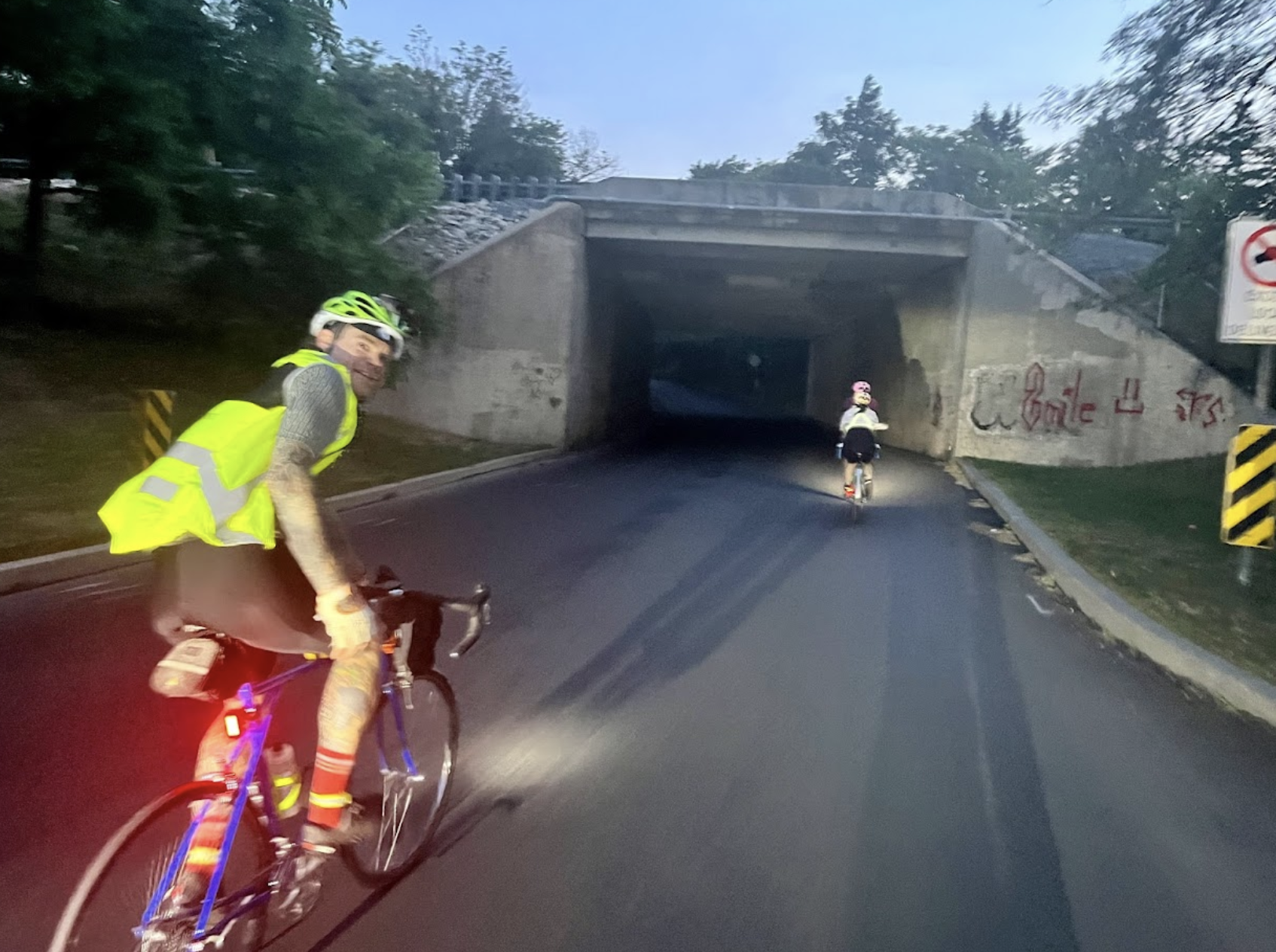
Left to right: Pat Gaffney and Gavin Biebuyck on the Swatara Trail; a volunteer makes announcements at a start control; quiet pre-dawn riding
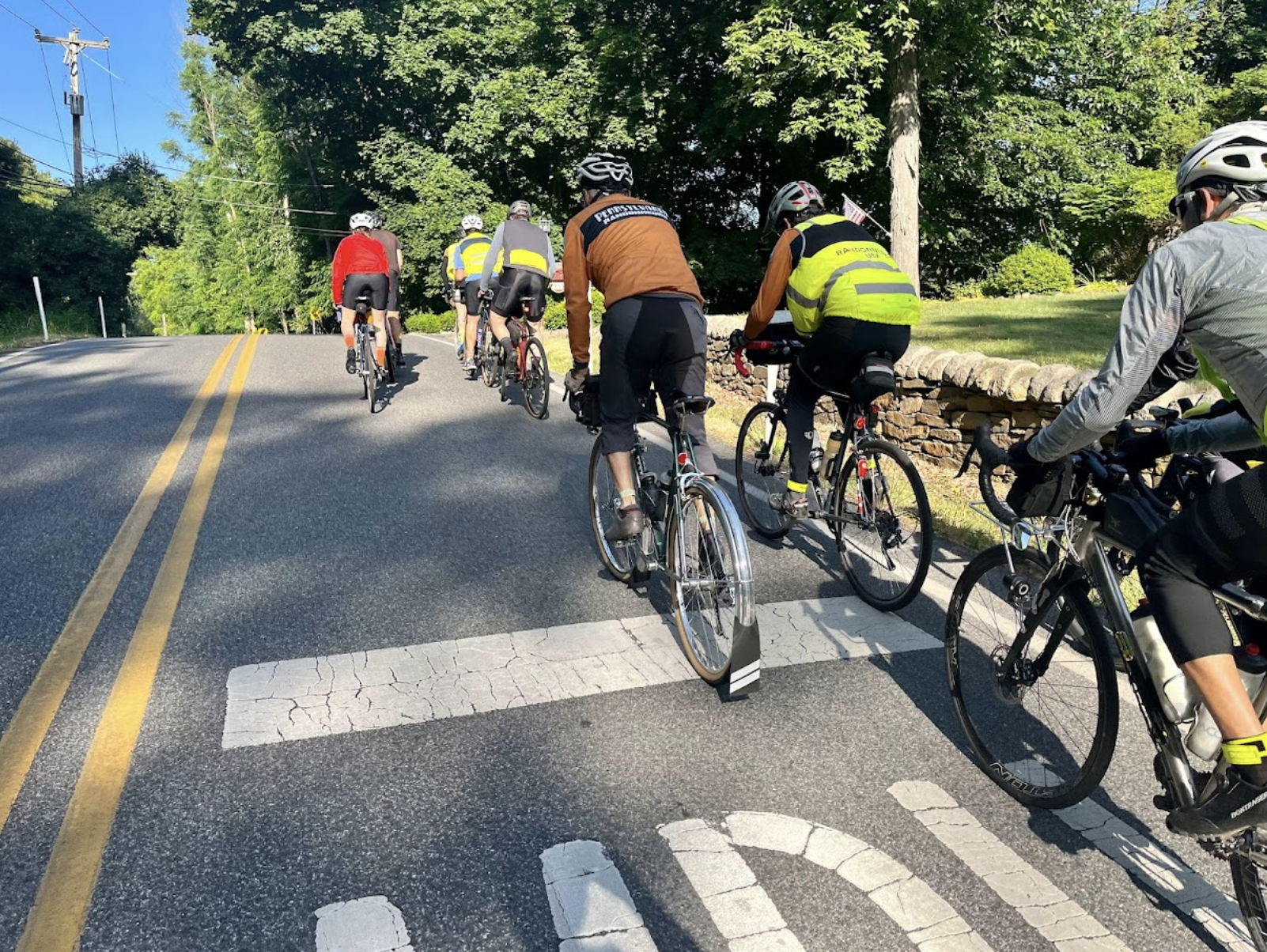
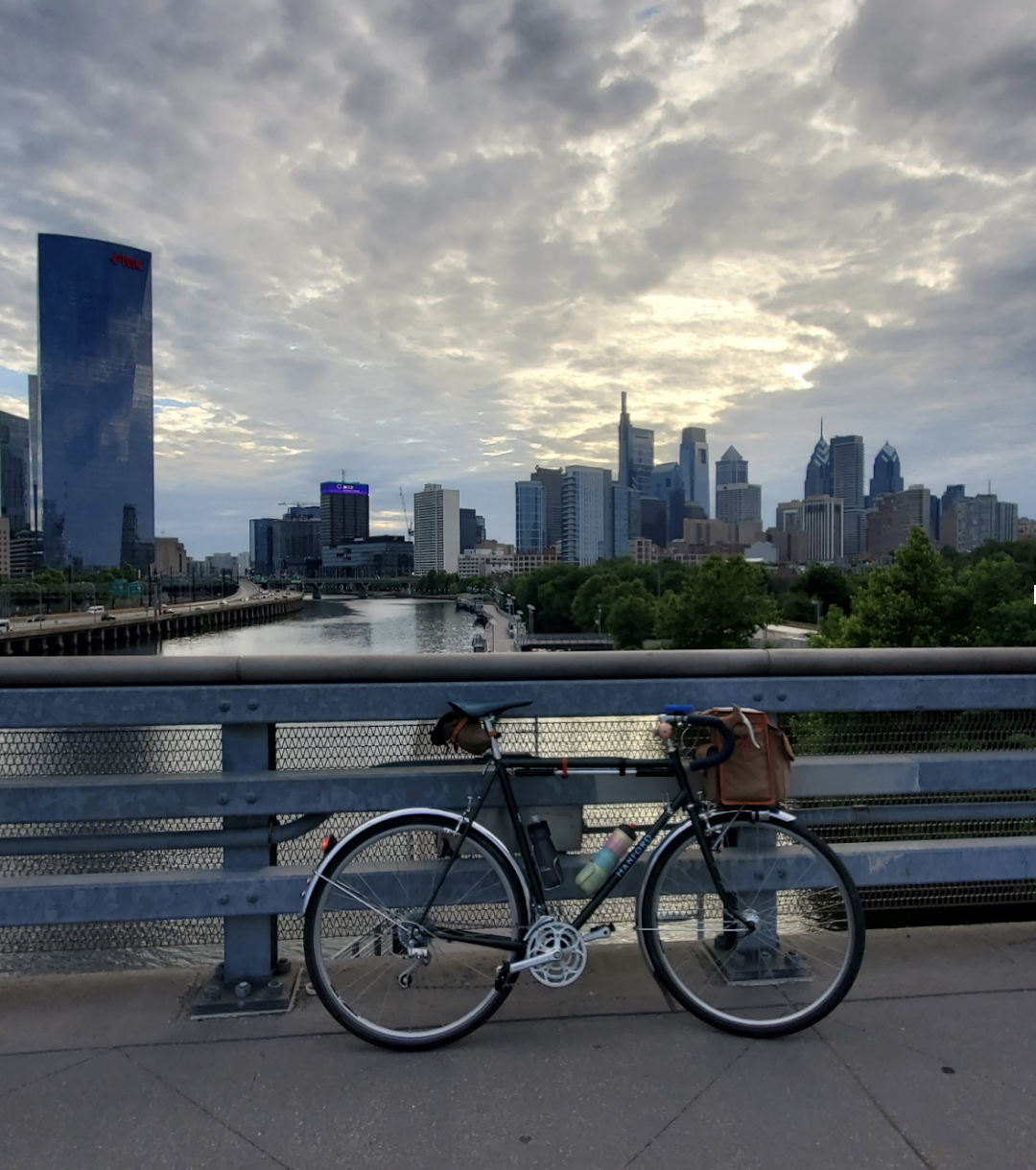
Randos (also short-hand for the riders who randonneur) ride a range of bikes: traditional steel rando builds with fenders, modern carbon frames, fat-tire rigs, and the occasional fixie.
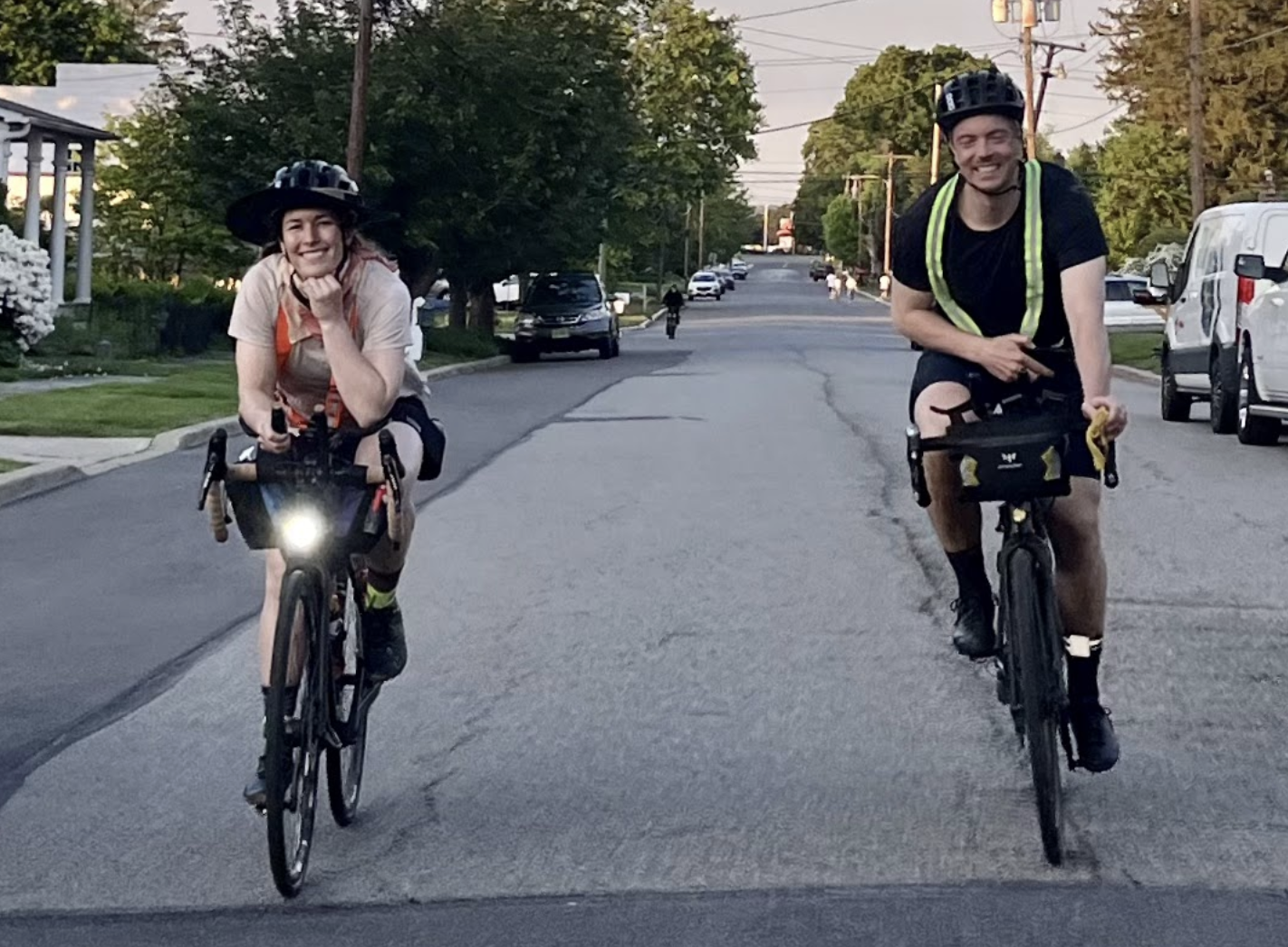
For many riders, it’s a chance to spend an unhurried day with friends, moving together through familiar roads, sharing snacks at controls, and letting the miles pass in conversation. For others, friendships form along the way. A shared headwind, a daunting climb, or a long quiet stretch can turn strangers into riding partners, bound by the work of solving the same problems on the road.
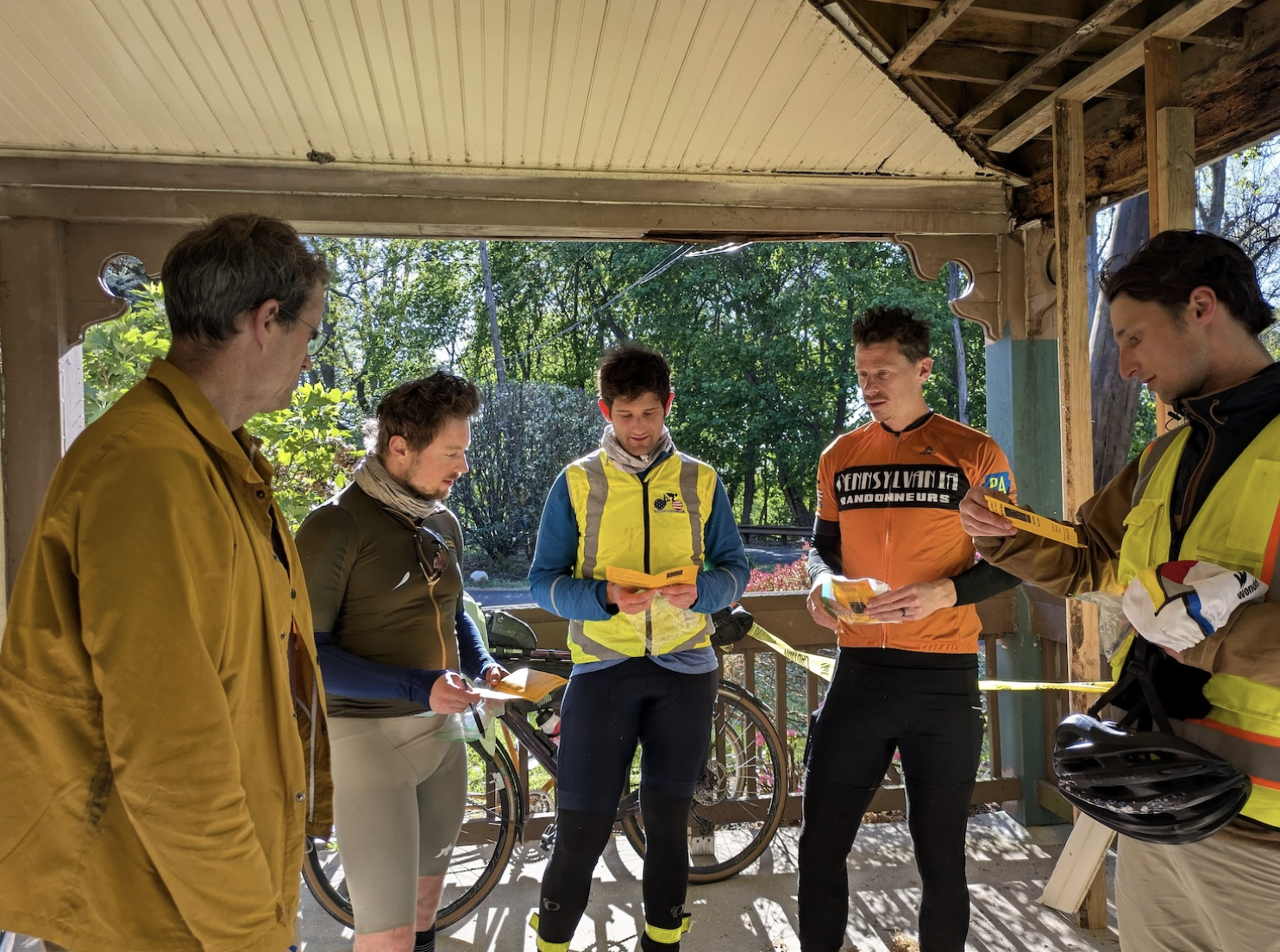
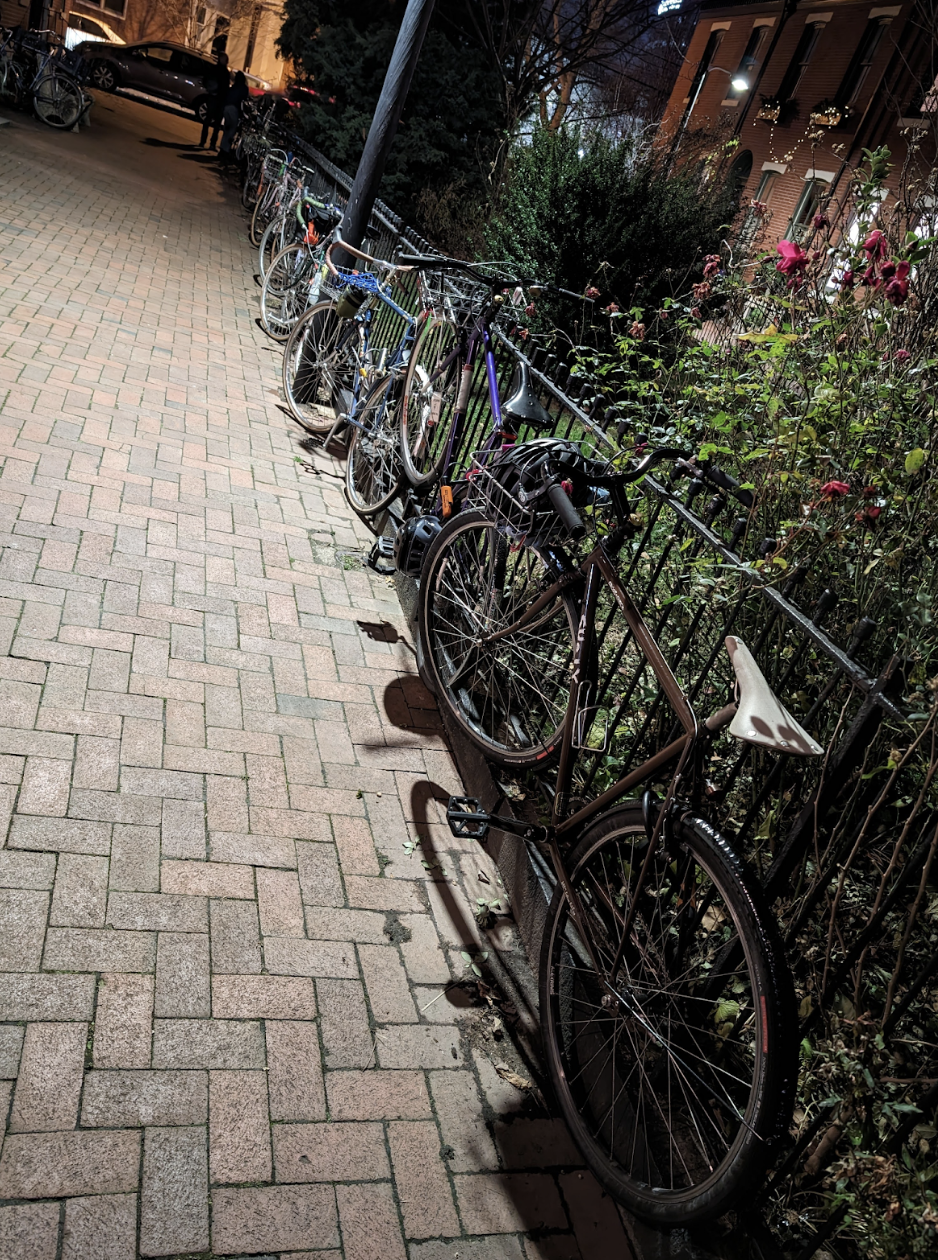
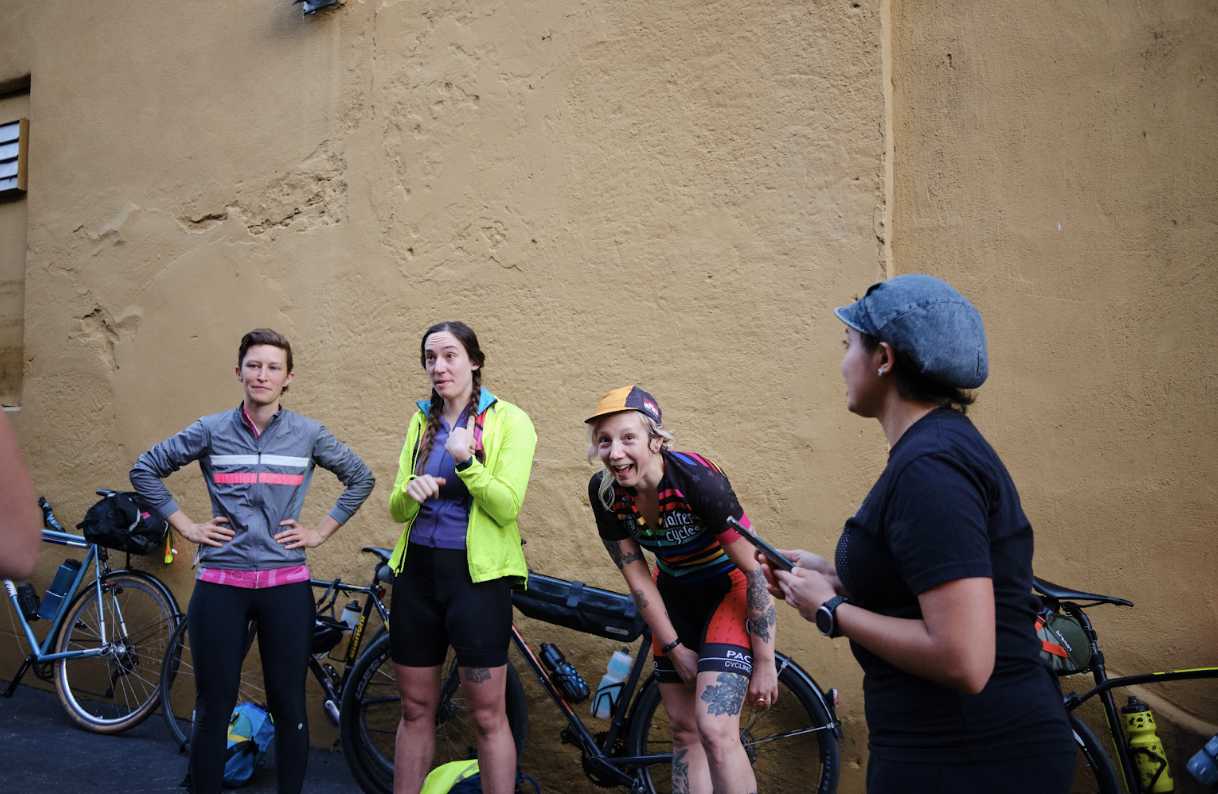
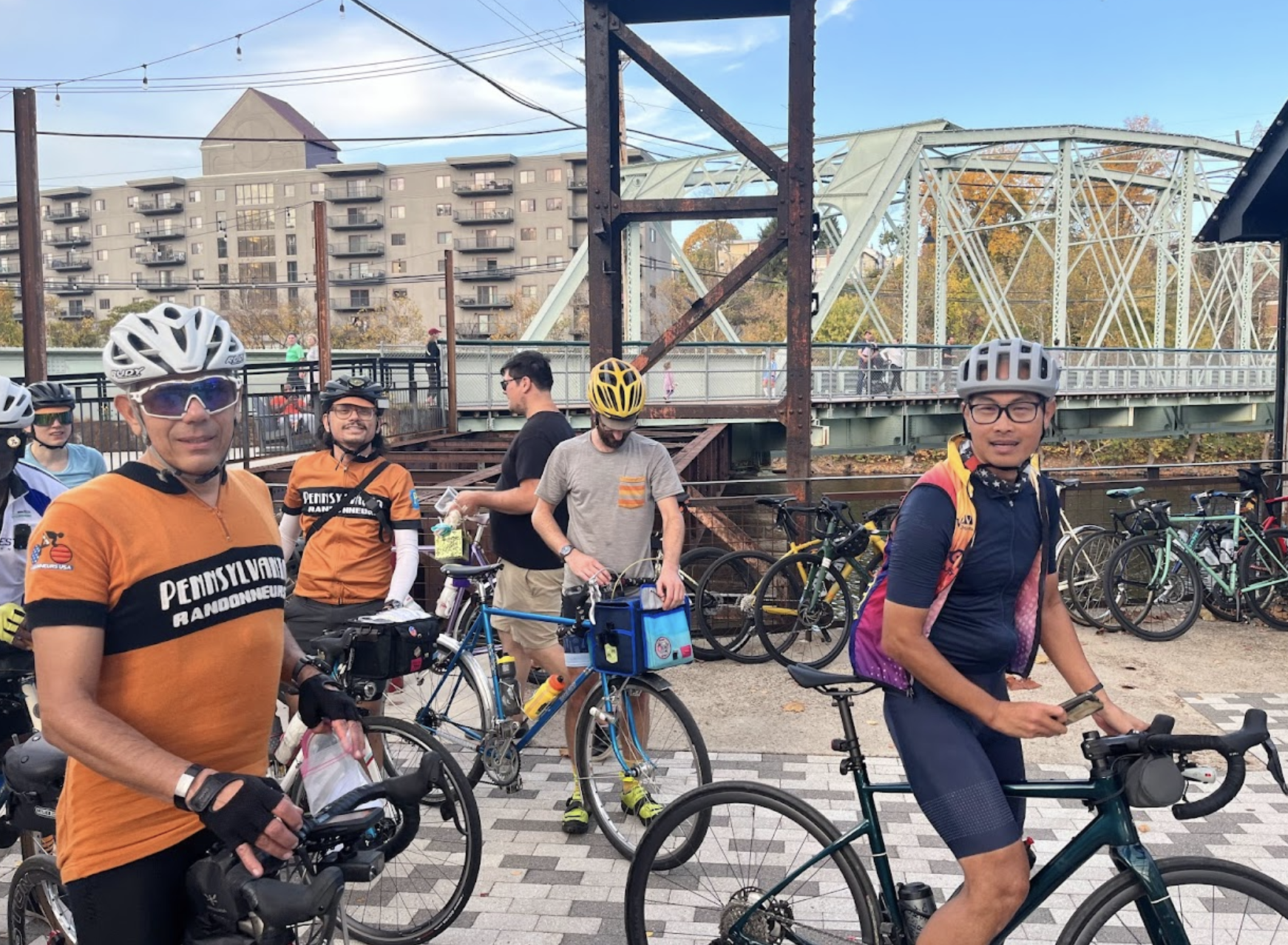
Scenes from finish controls
Miles & moments
Randonneuring brings attention to details that might otherwise go unnoticed. Food, clothing, weather, terrain, and timing all require thought, though how much and when varies. Some riders start with a Plan A, B, C, and D. Others make it up as they go. Mechanical issues, unexpected weather, and nutrition issues are unavoidable on long rides and tend to teach riders to address small problems before they grow into ride-ending ones.
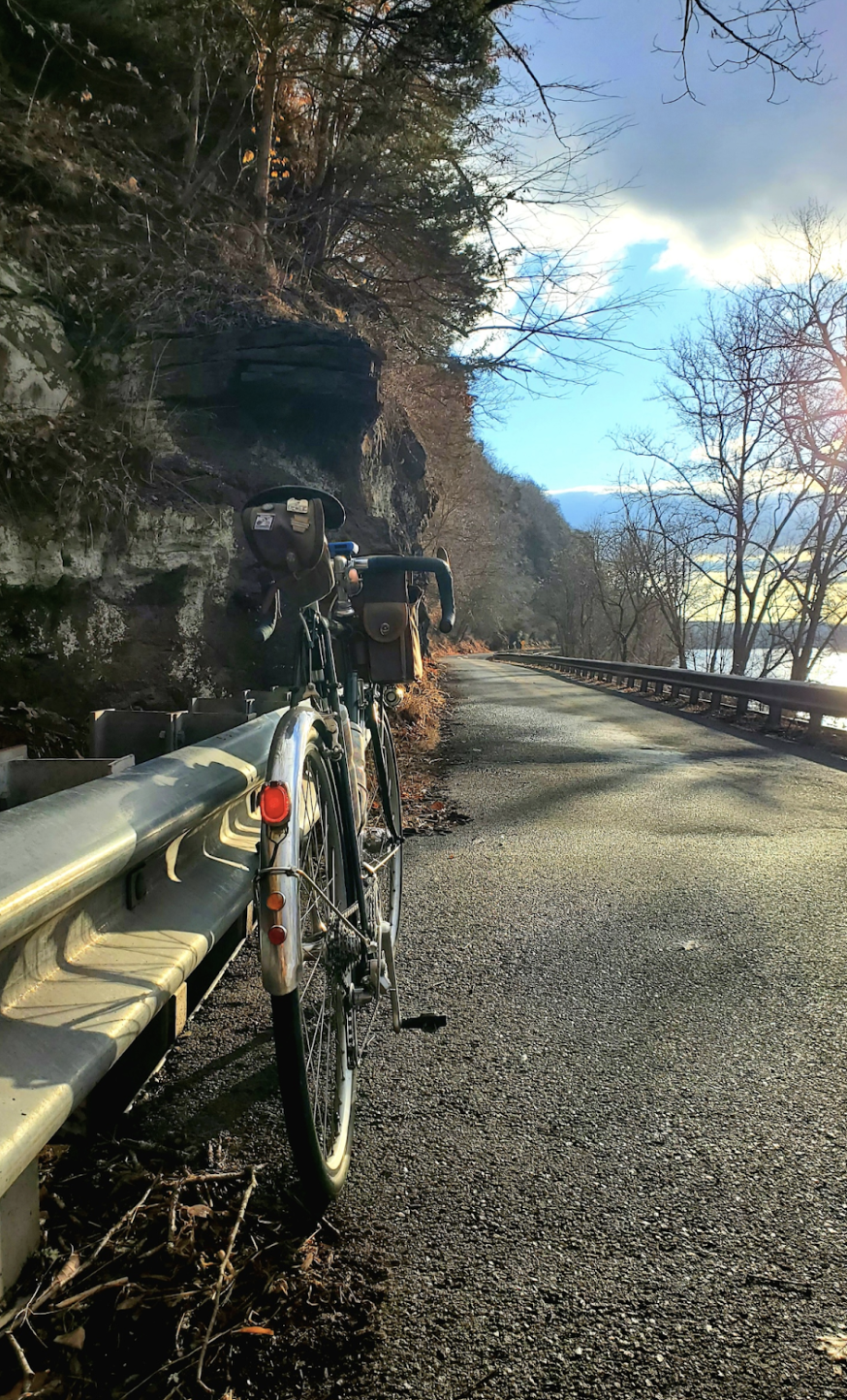
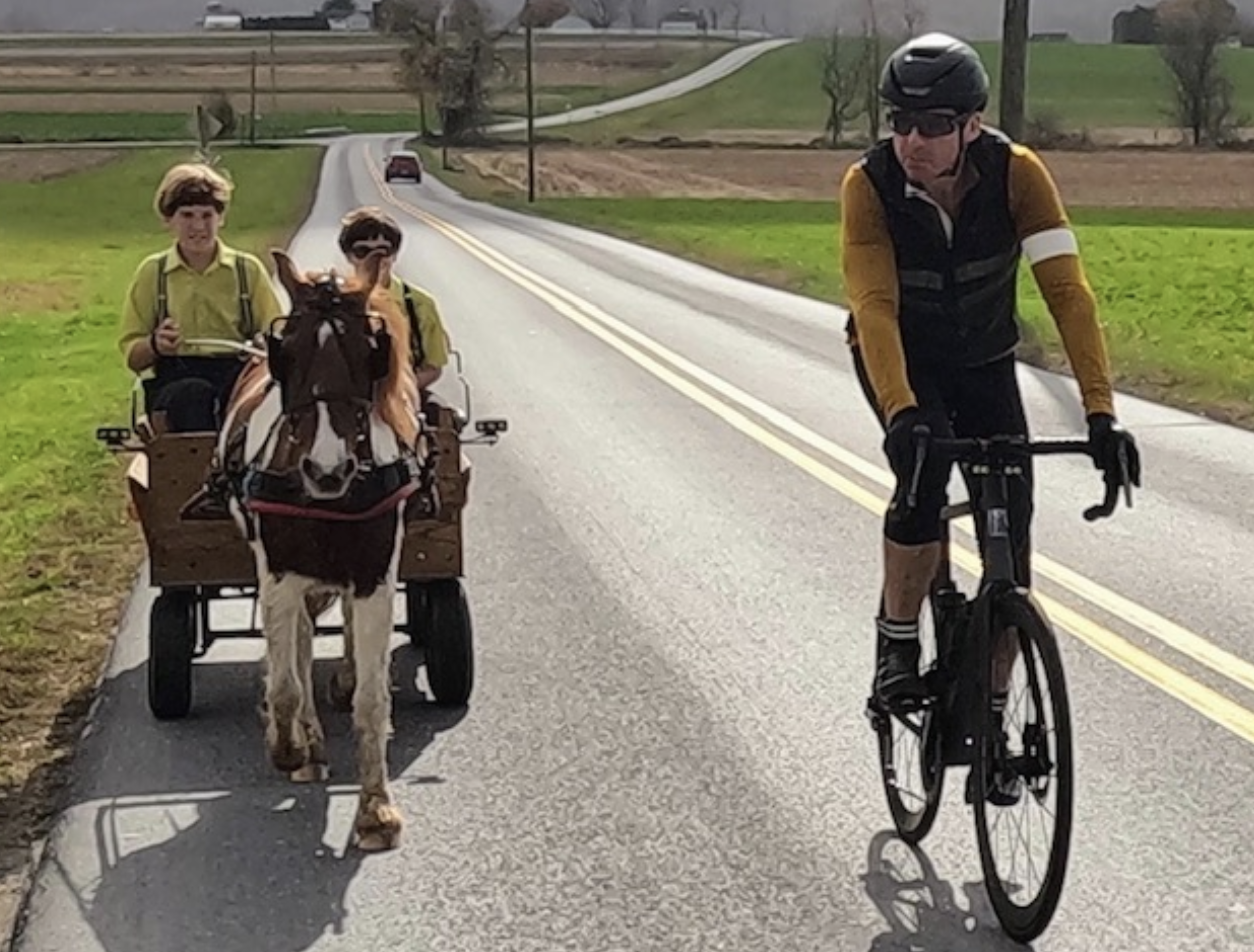
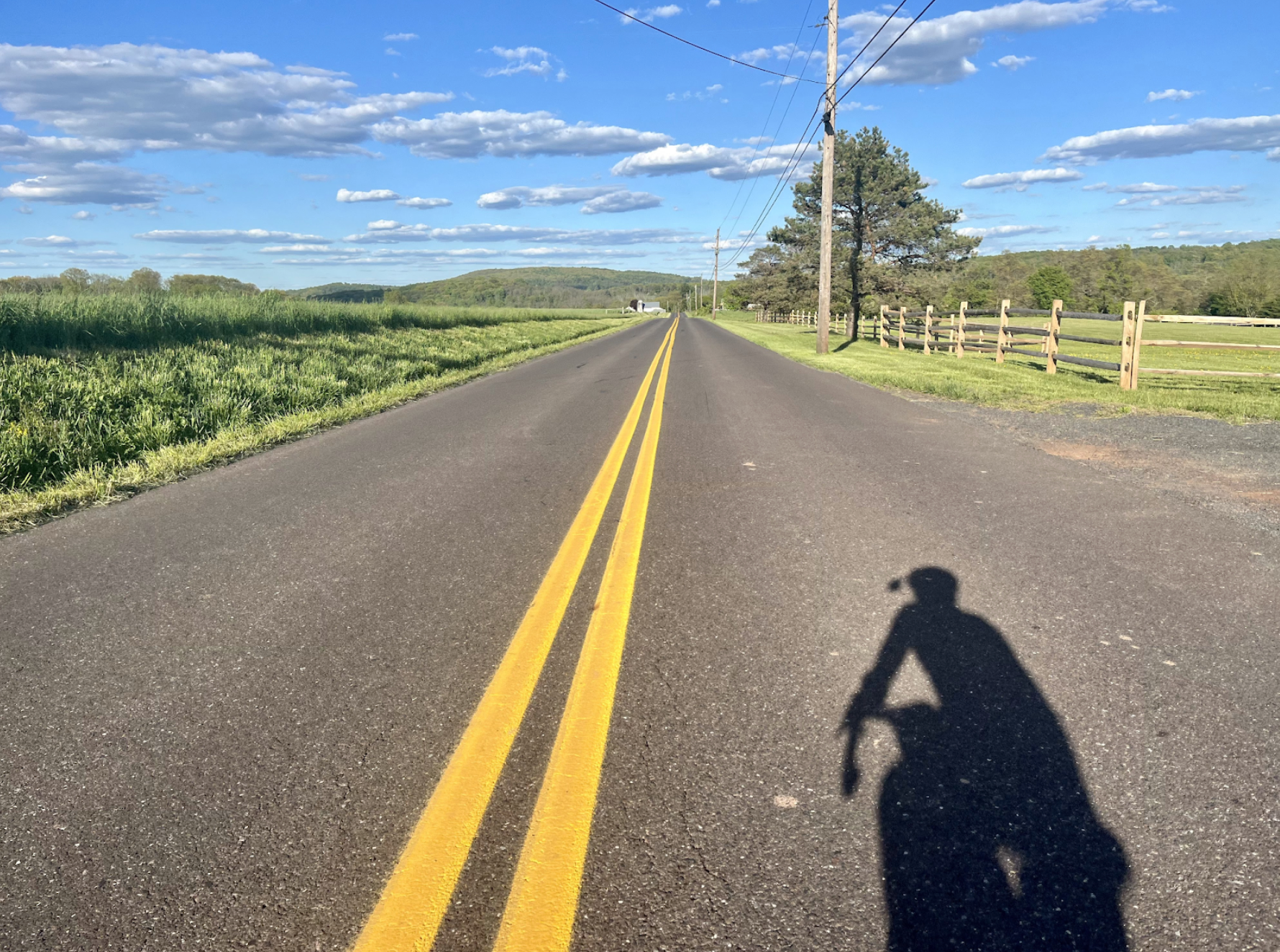
The routes leave their own impressions. The Pennsylvania Randonneurs is the Philly region’s randonneuring club, and its brevets climb the rolling hills of Chester County, follow the Brandywine through wooded creekside roads, and wind past historic farmsteads in Bucks County. In the fall, those miles unfold beneath bright colors, past stone barns and whitewashed fences, and over quiet covered bridges. The road stretches onward across towering Appalachian ridgelines or into the flat, sandy quiet of the New Jersey Pine Barrens. Suddenly, the familiar hum of traffic is replaced by the clip-clop of Amish horse-drawn carriages. On longer days, the miles drift beyond Wawa-land’s borders and into the rivaling territory of Sheetz.
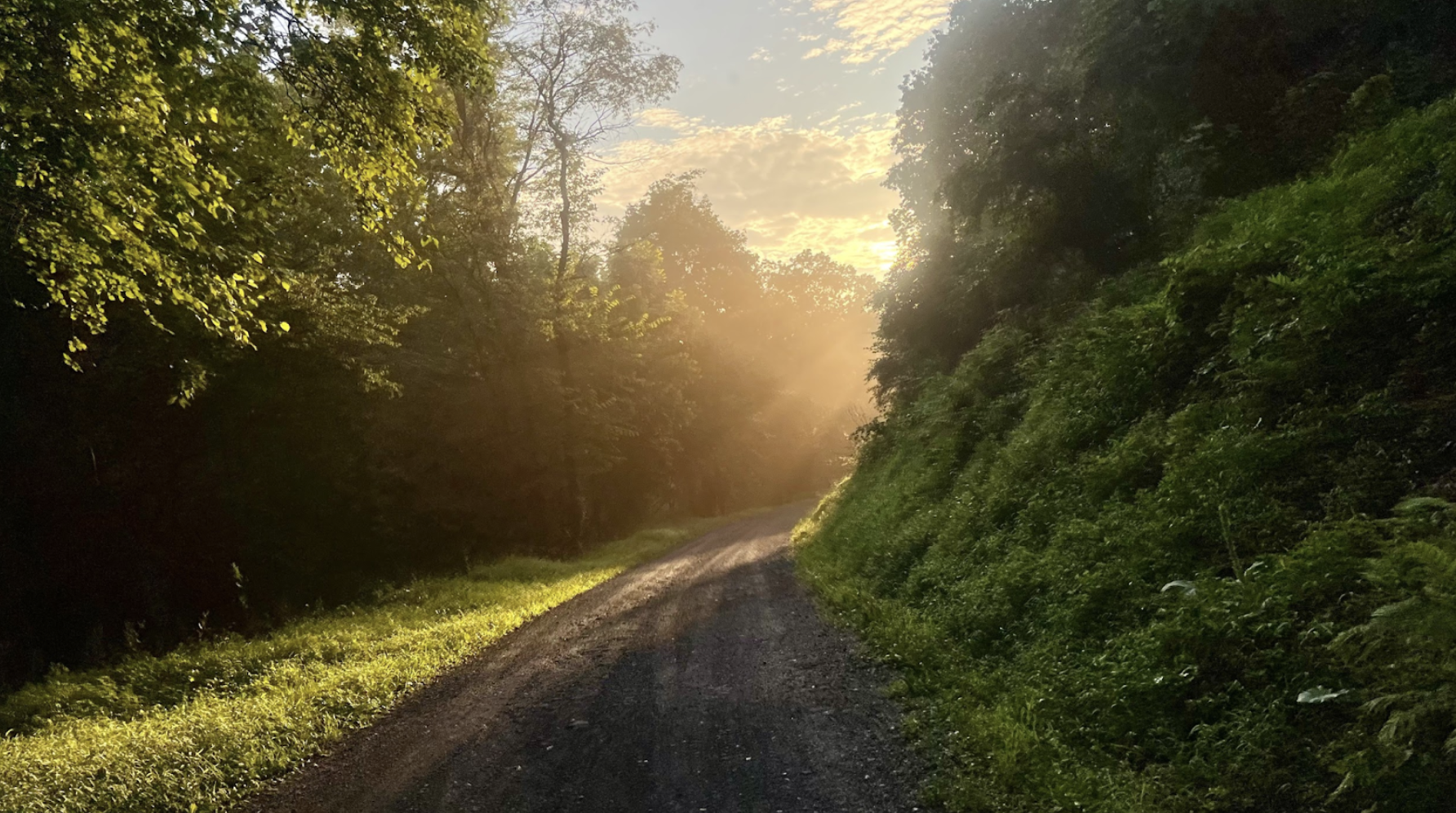
What is memorable about a ride afterward can be subtle. A stretch of road at first light, mist lifting from fields. Long shadows sliding across pavement late in the day. Wheels humming in the dark. Watching sunrise and sunset unfold on the same ride. A perfectly timed ice cream stop that feels earned. Shared miles add another layer. Conversations at controls, riding quietly for a stretch, encouragement from strangers, and inside jokes with riding partners.
When the ride turns inward
Ten miles to the next control. On a PA Rando brevet, there’s a good chance that control is a Wawa. Their uniform layouts make planning easy, allowing my thoughts to drift to sodas, chips, candy bars. Maybe a hoagie. Or a bag of sour gummies for the next stretch of road.
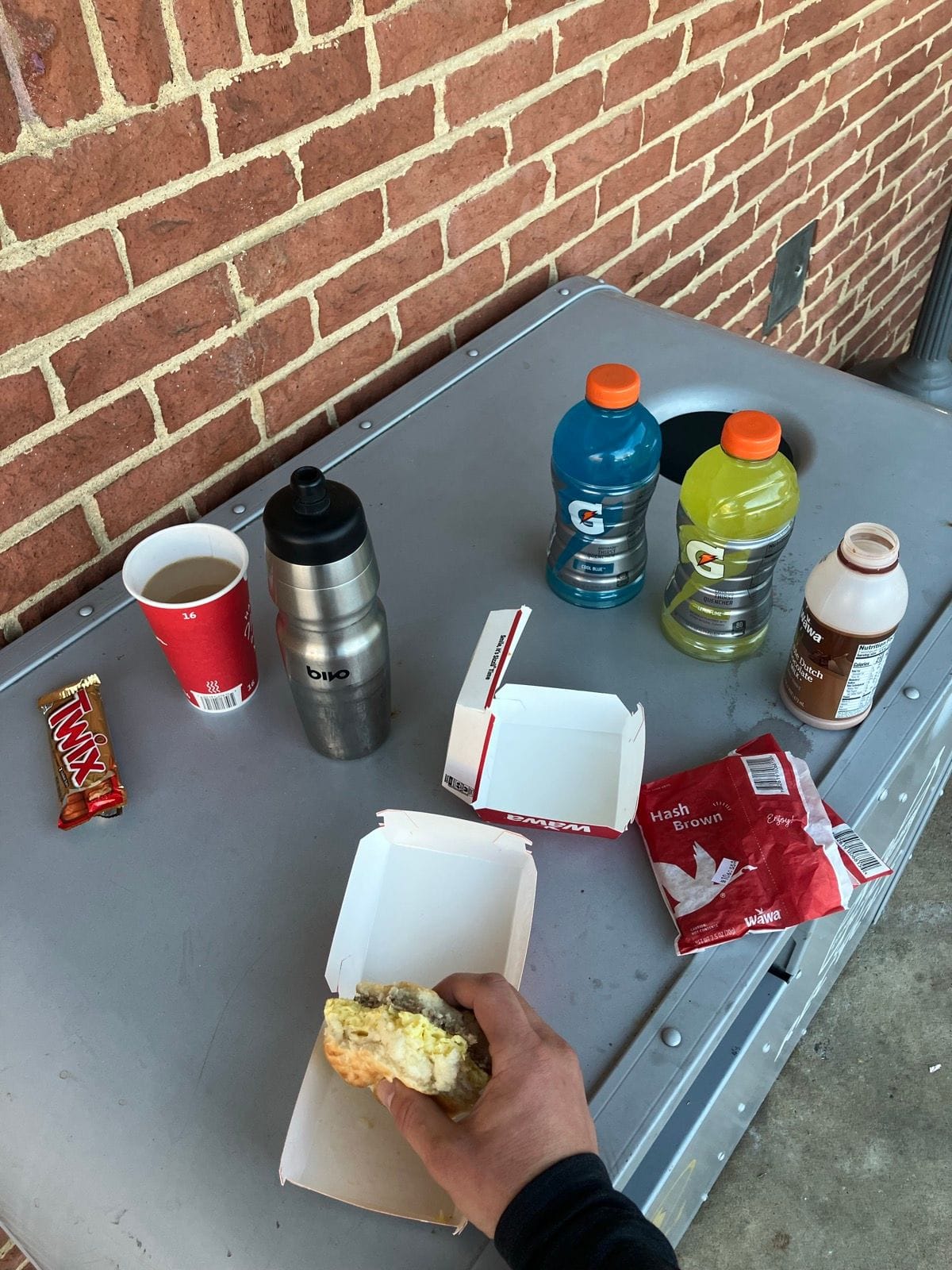
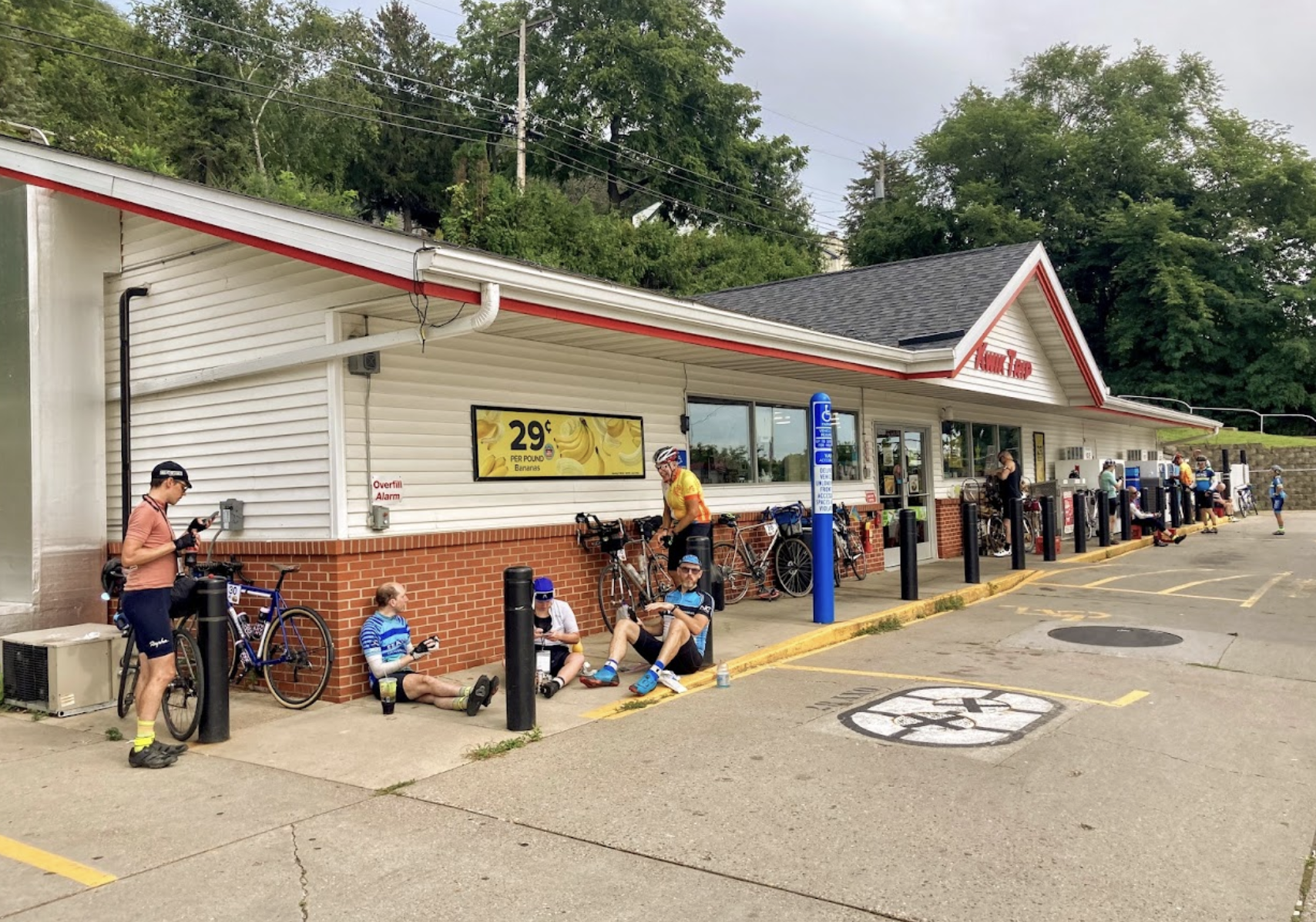
Randos always enjoy a good convenience store control (photo on left by Jakub Piven)
As the miles keep coming, my attention shifts. Sometimes I turn inward. A special bagel with a latke on it or a cider donut becomes a highlight. When the odometer reaches one hundred miles, my reactions vary. The high, round number may register immediately and bring a quiet lift, or it may slip by unnoticed. Either way, the ride does not suddenly feel bigger or harder. It simply continues, much as it has before.
Early in a long ride, there is the math of pace, time limits, and distance to the next stop hovering in the background. As the hours pass, I find that that thinking may fade for a while as effort settles into a rhythm. Progress becomes practical. Reach the control. Eat. Refill bottles. Start again.
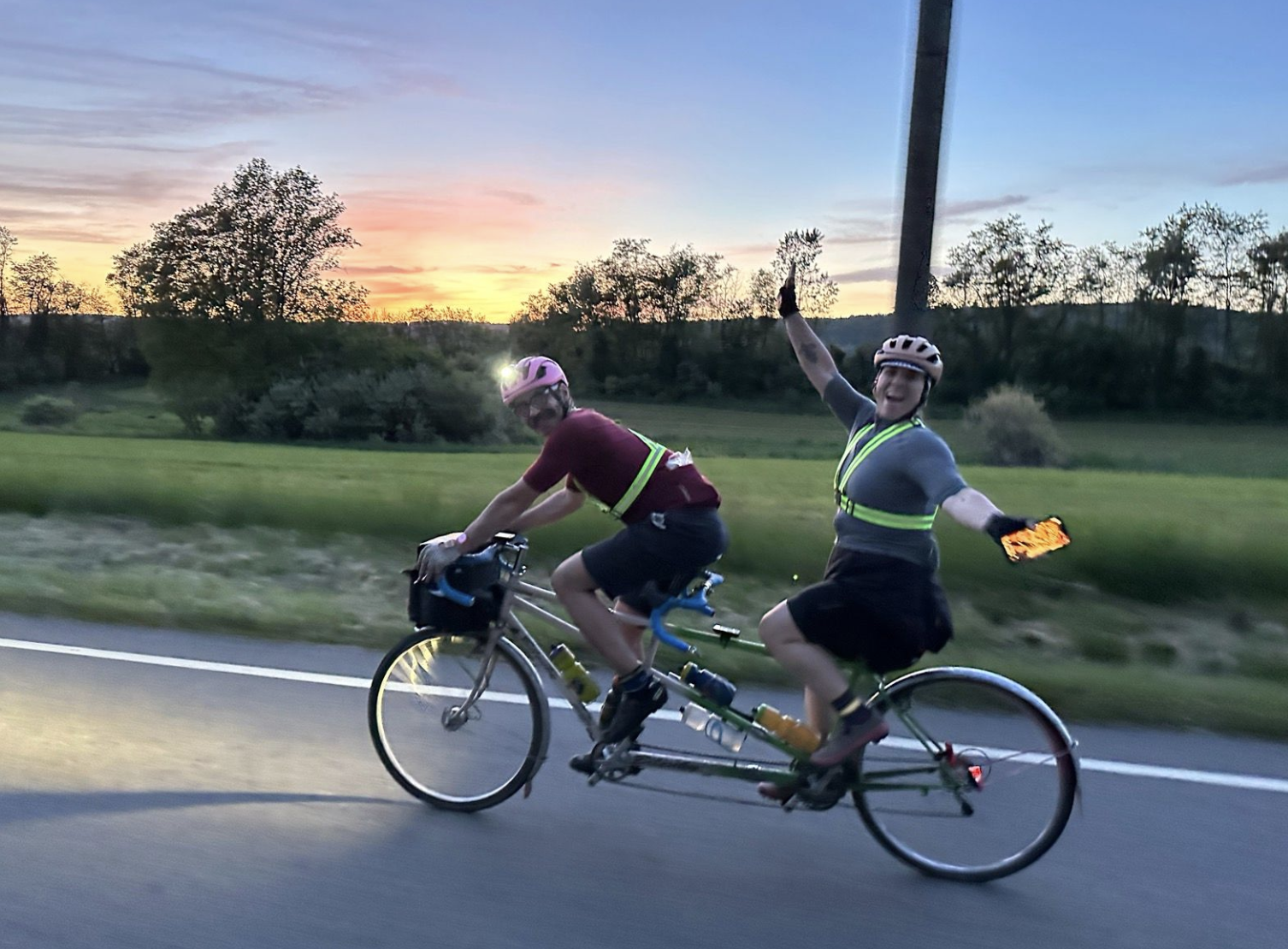
As the day unfolds, attention shifts back and forth. Distance recedes once a rhythm sets in, then reasserts itself when conditions change. The effort may feel smoother with each hour, or just as demanding late in the ride as it did early on. These shifting rhythms, small decisions, and practical challenges are not side effects of the ride. They are the ride.
The Road-to-200K Series
A 200K brevet is long enough to require planning, restraint, and persistence, but accessible with steady preparation. To support that progression and bridge shorter rides toward a full 200K, the Pennsylvania Randonneurs will host the Road-to-200K Series in Philadelphia this spring.
PA Rando 2026 Road-to-200K Series:
- International Women’s Day 107K – March 14
- Ride Your Butt(er) Off for a Cause 161K – April 11
- Tscheschter Kaundi 200K – May 9
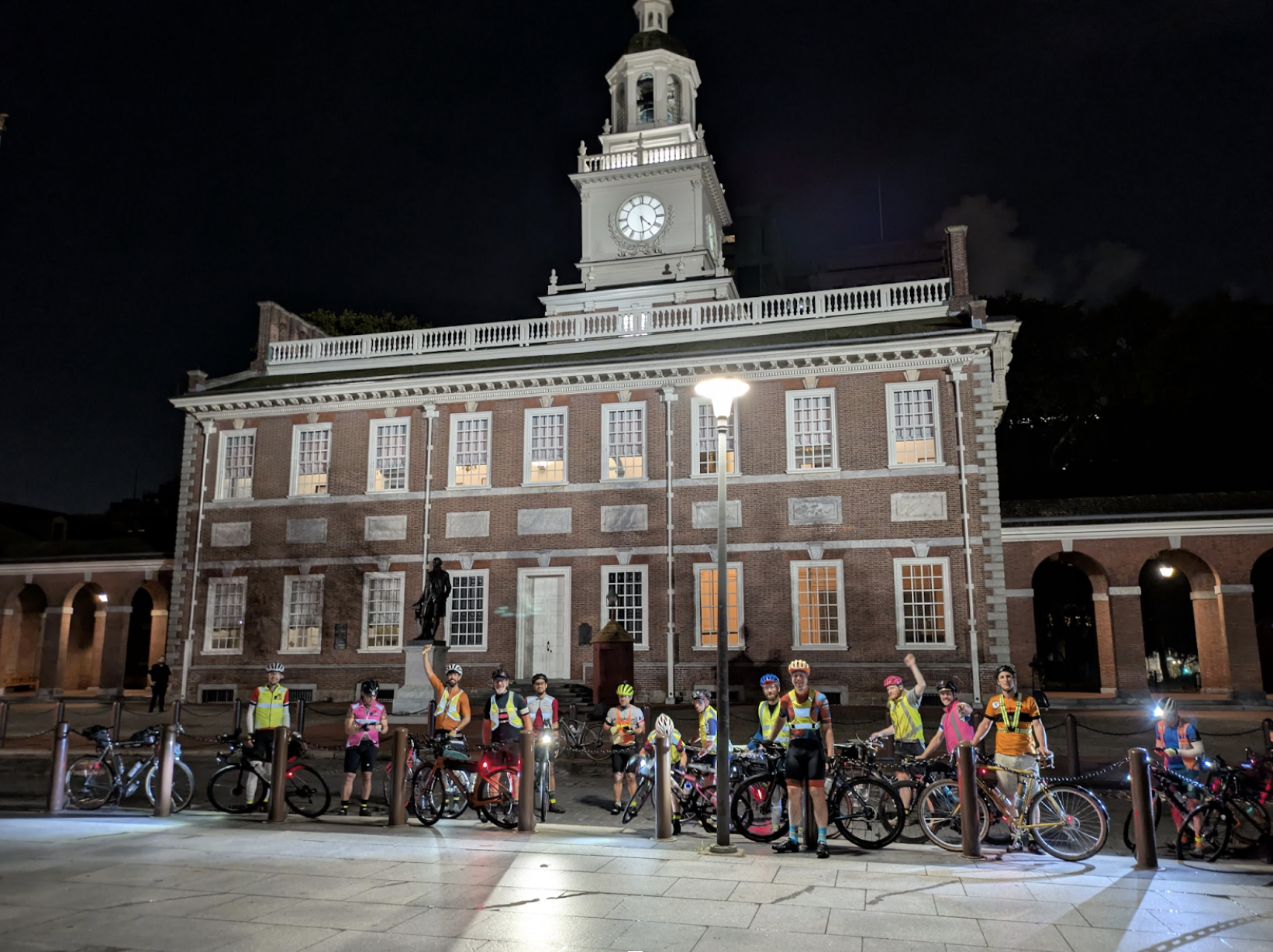
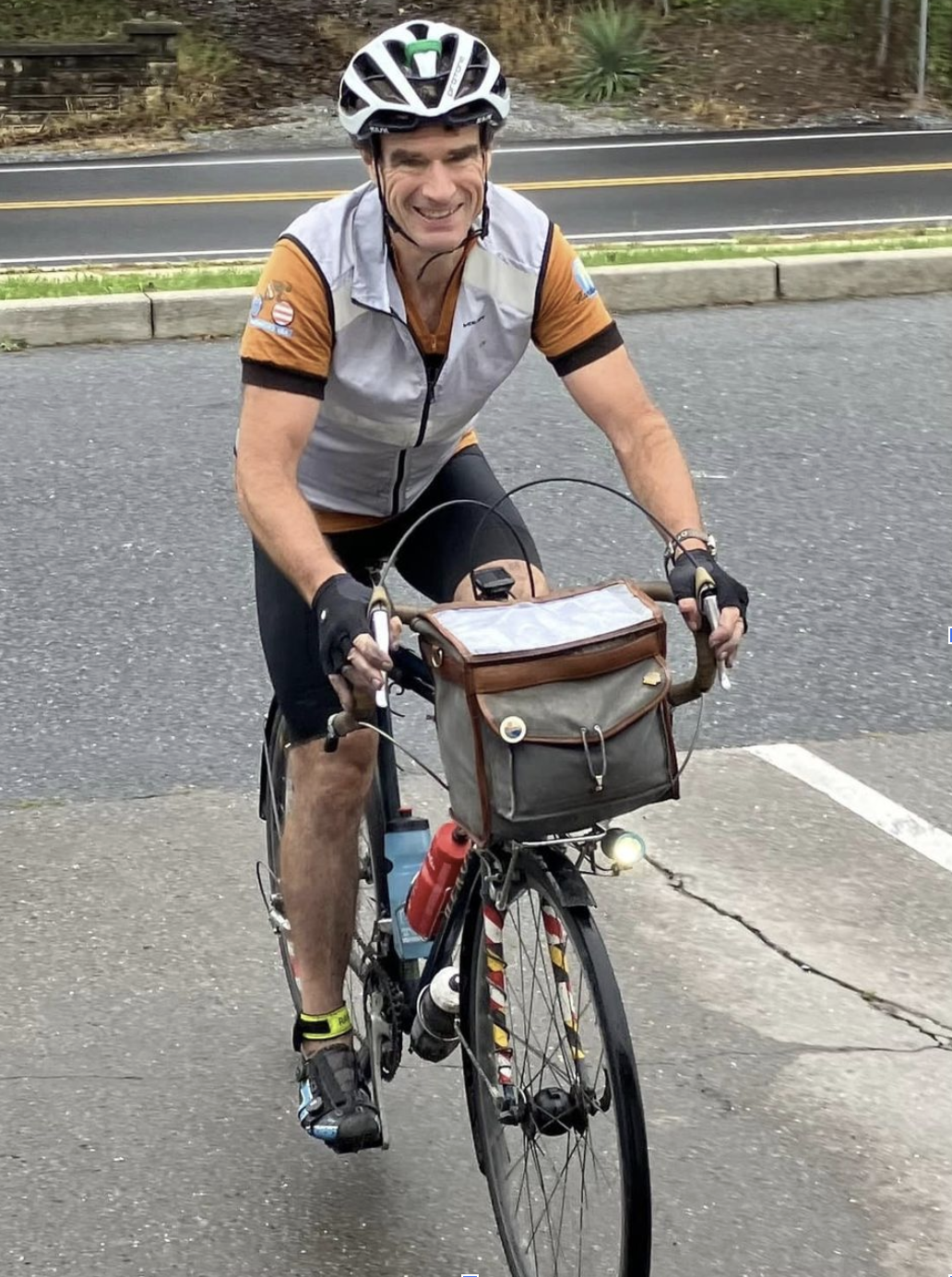
Riders check into a control at Independence Hall (left); Ben Keenan (right)
The Super Randonneur Series
Beyond the 200K lies the Super Randonneur (SR) Series: a sequence of four brevets: 200K, 300K, 400K, and 600K. Each step extends the same principles rather than introducing new ones. Longer distances amplify lessons learned. The PA Randonneurs offer an SR Series out of Philadelphia every spring.
The PA Rando 2026 SR Series:
- Ronde van White Clay 200K on March 21
- Hawk Mountain 300K on April 11
- Four State 400K on May 9
- Bleu Kaundi 600K on June 6-7
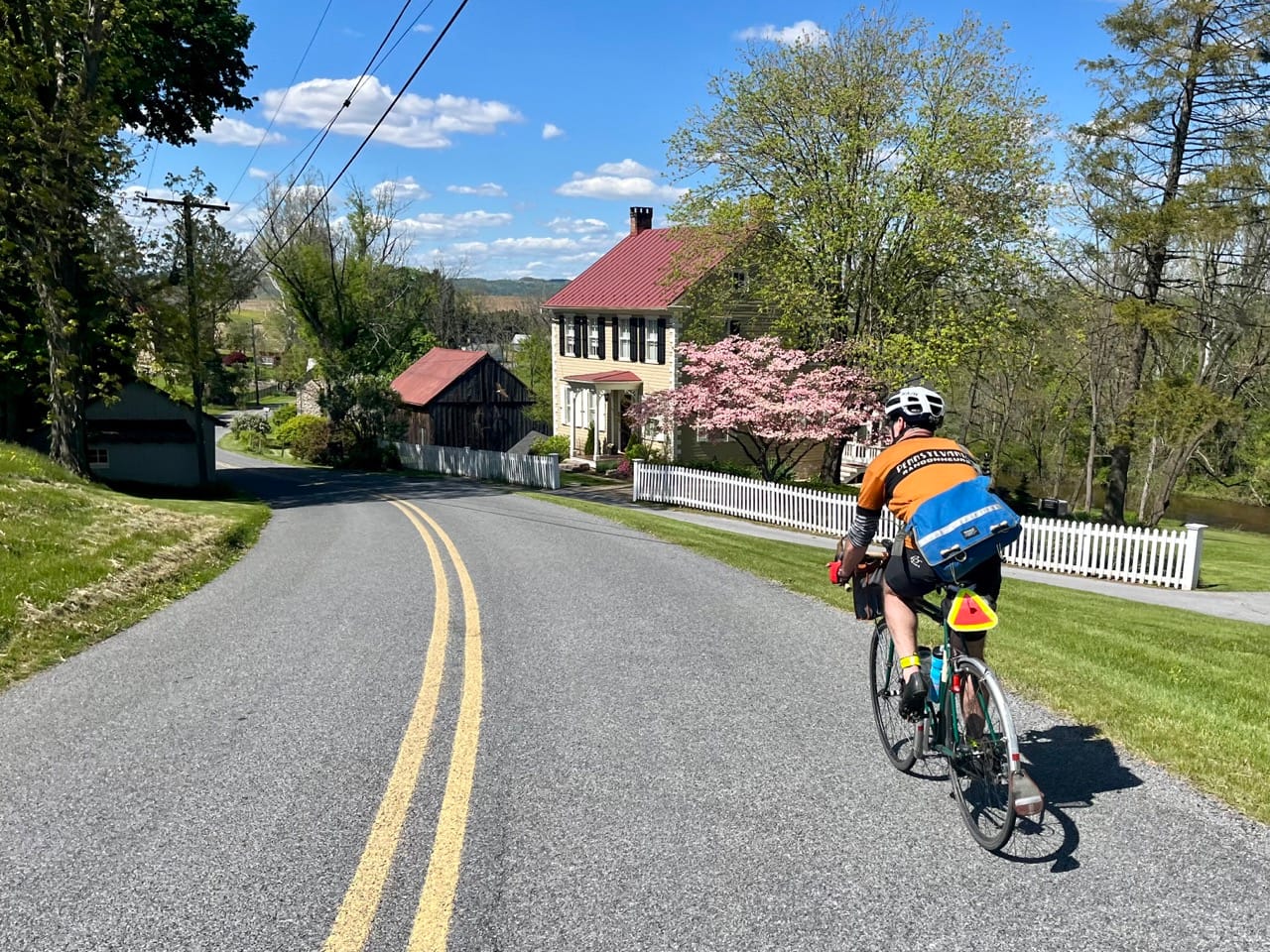
Riders who complete an SR Series often point to rewards: steadier endurance and sharper problem-solving, and a deep sense of camaraderie built through shared challenges. Together, these elements are why riders return, drawn by the satisfaction of doing something difficult on purpose.
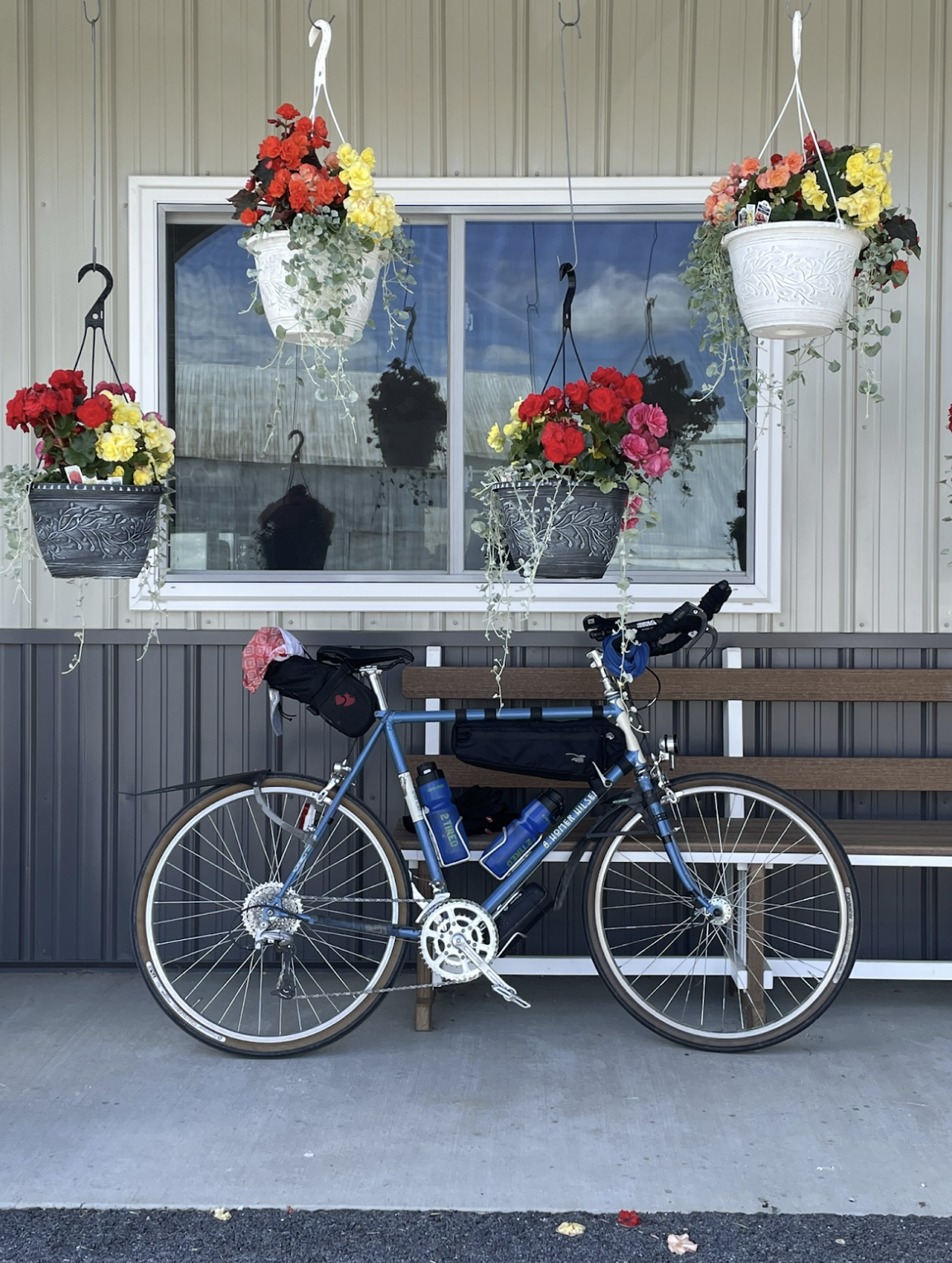
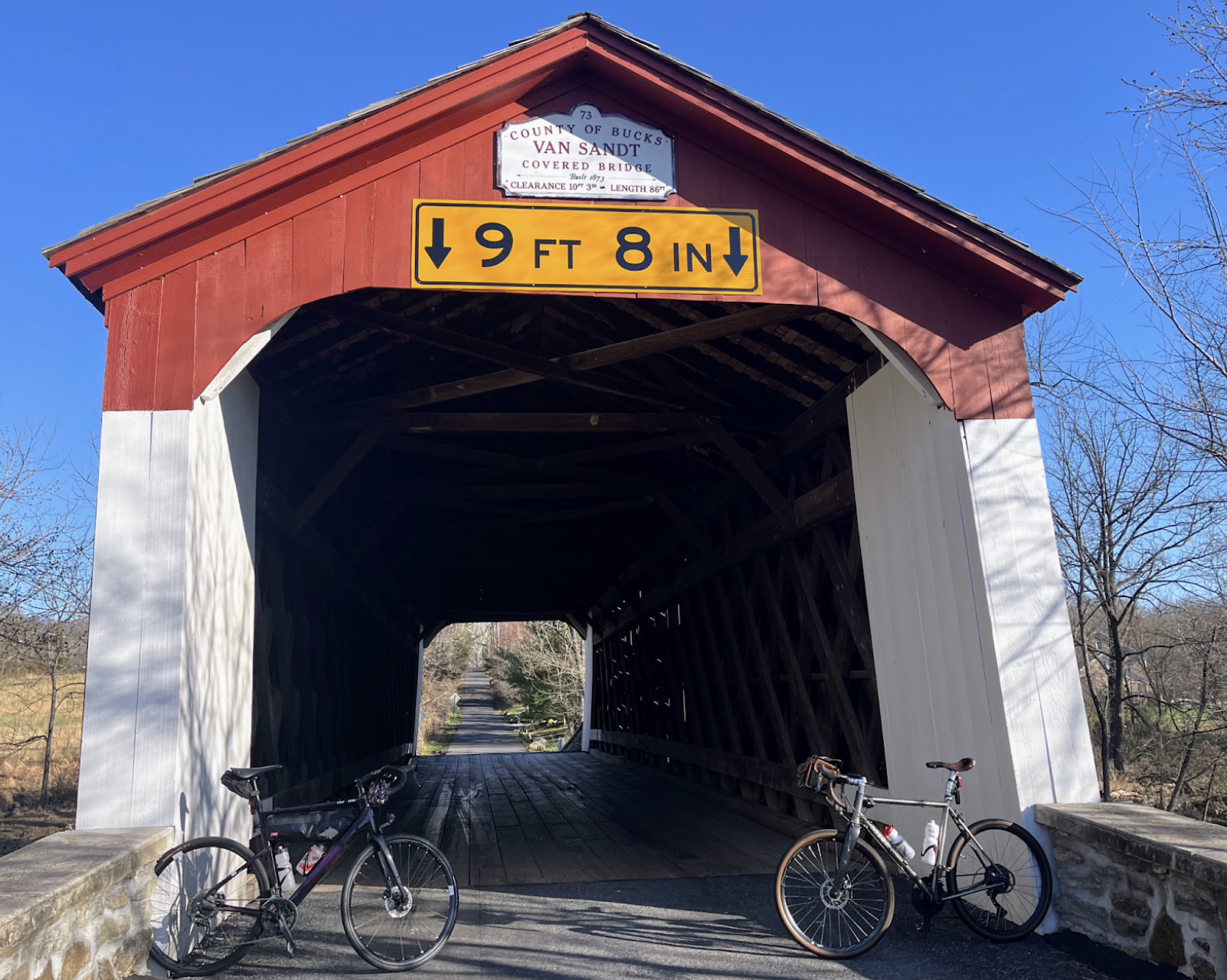
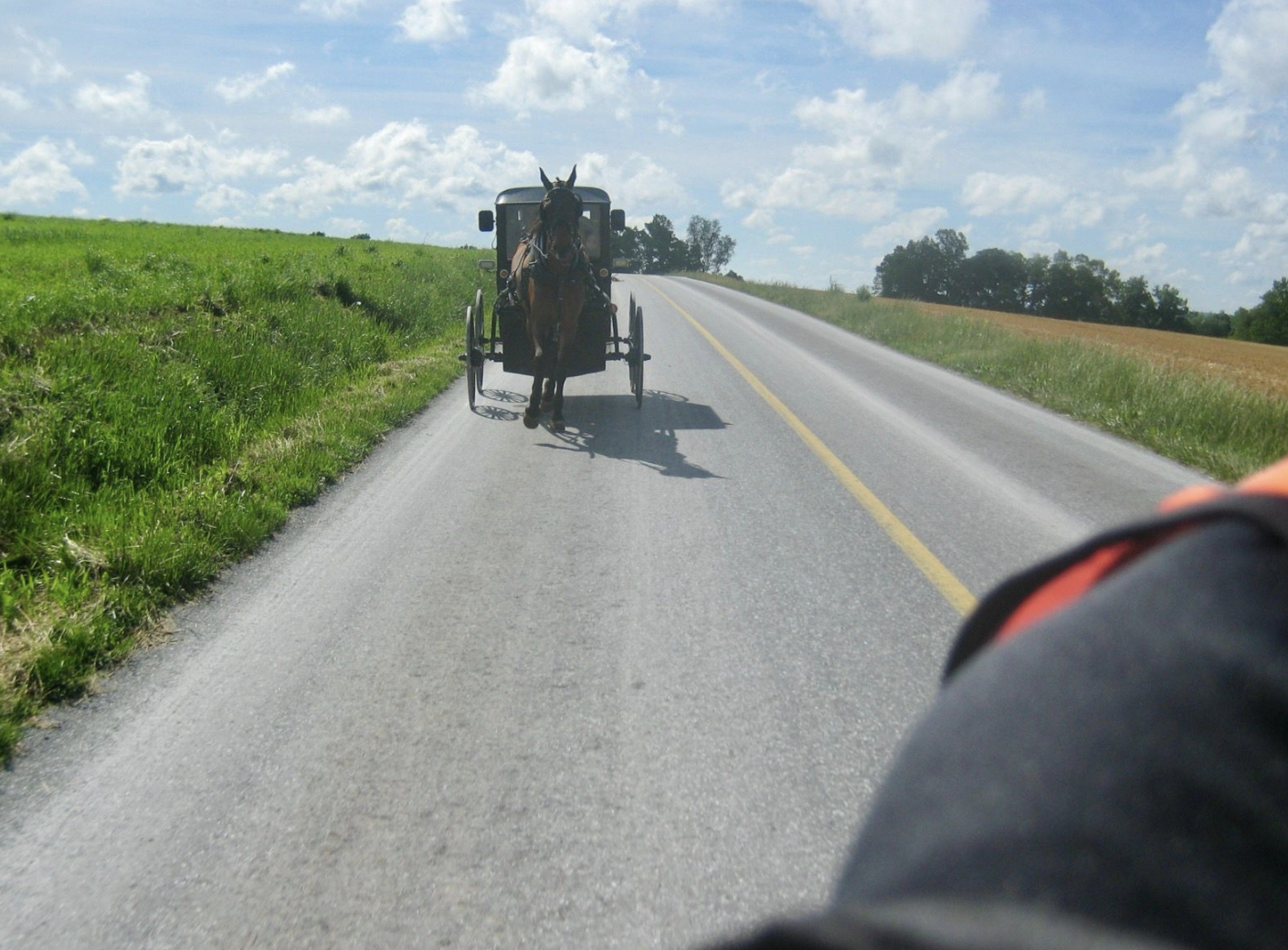
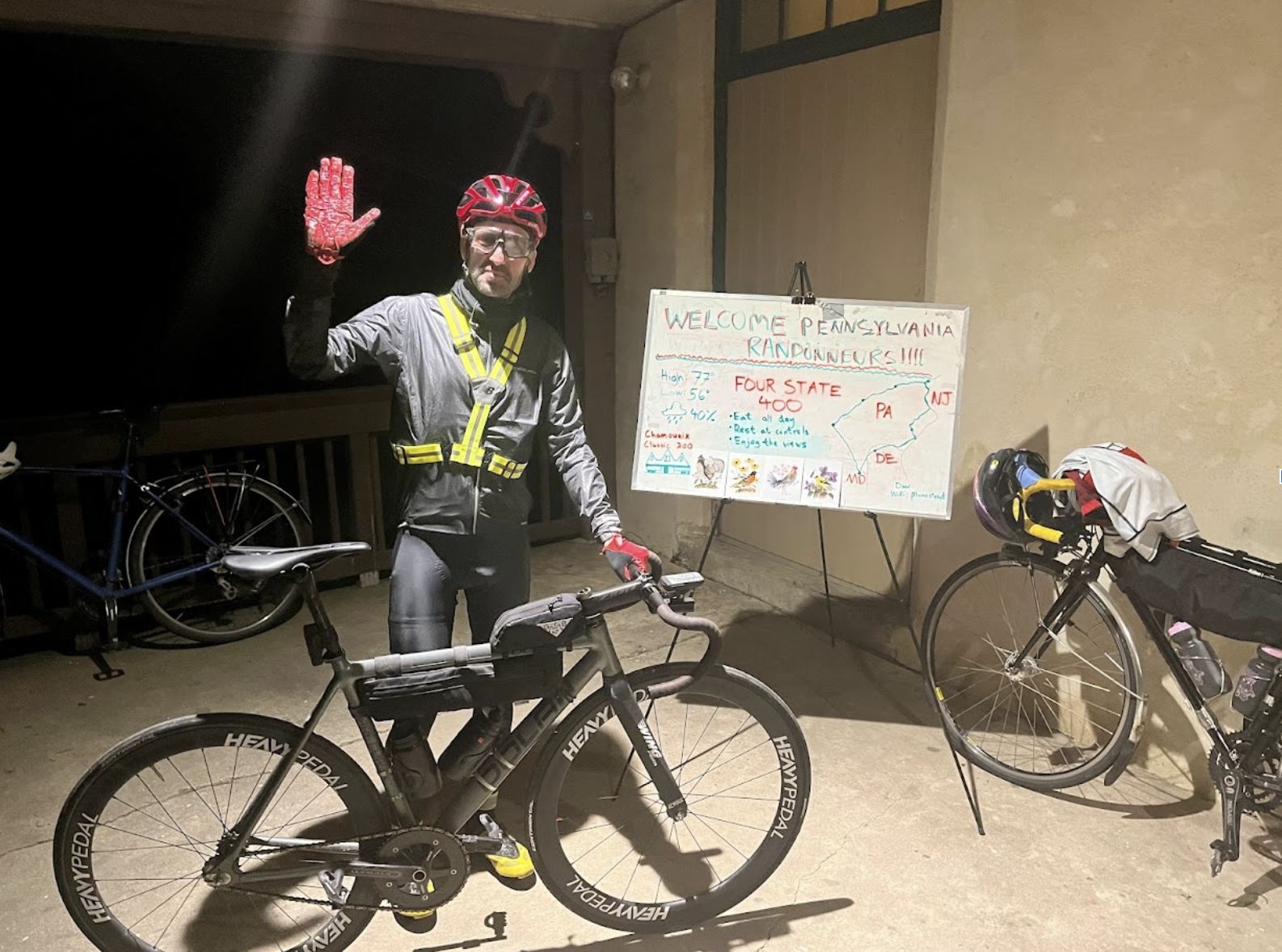
Clockwise from top left: A farm stand stop (photo by Michael Reali); covered bridge in Bucks Co; Chris Kline on a 600K; Greg Lang finishes a 400K on a fixie(!); Amish Country
Zooming out to PBP 2027
For some, these rides form a longer arc toward Paris–Brest–Paris (PBP), the 1,200K event held every four years. The next edition takes place in August 2027.
Participation in PBP requires completing a full SR Series in the same year. Many riders use earlier SR Series attempts as preparation and refining systems, so strong participation is expected in the PA Rando SR Series in the lead-up to 2027.
Join us!
Whether or not a long-term goal like PBP is on the horizon, each brevet stands on its own. On PA Rando brevets, it is tradition for riders and volunteers to remain at the finish until the last rider arrives. It is usually a joyous gathering where tales of the day are shared, accomplishments are toasted, and plans are made for the next ride. Neon clothing, mismatched gear, and tired smiles are part of the scene.
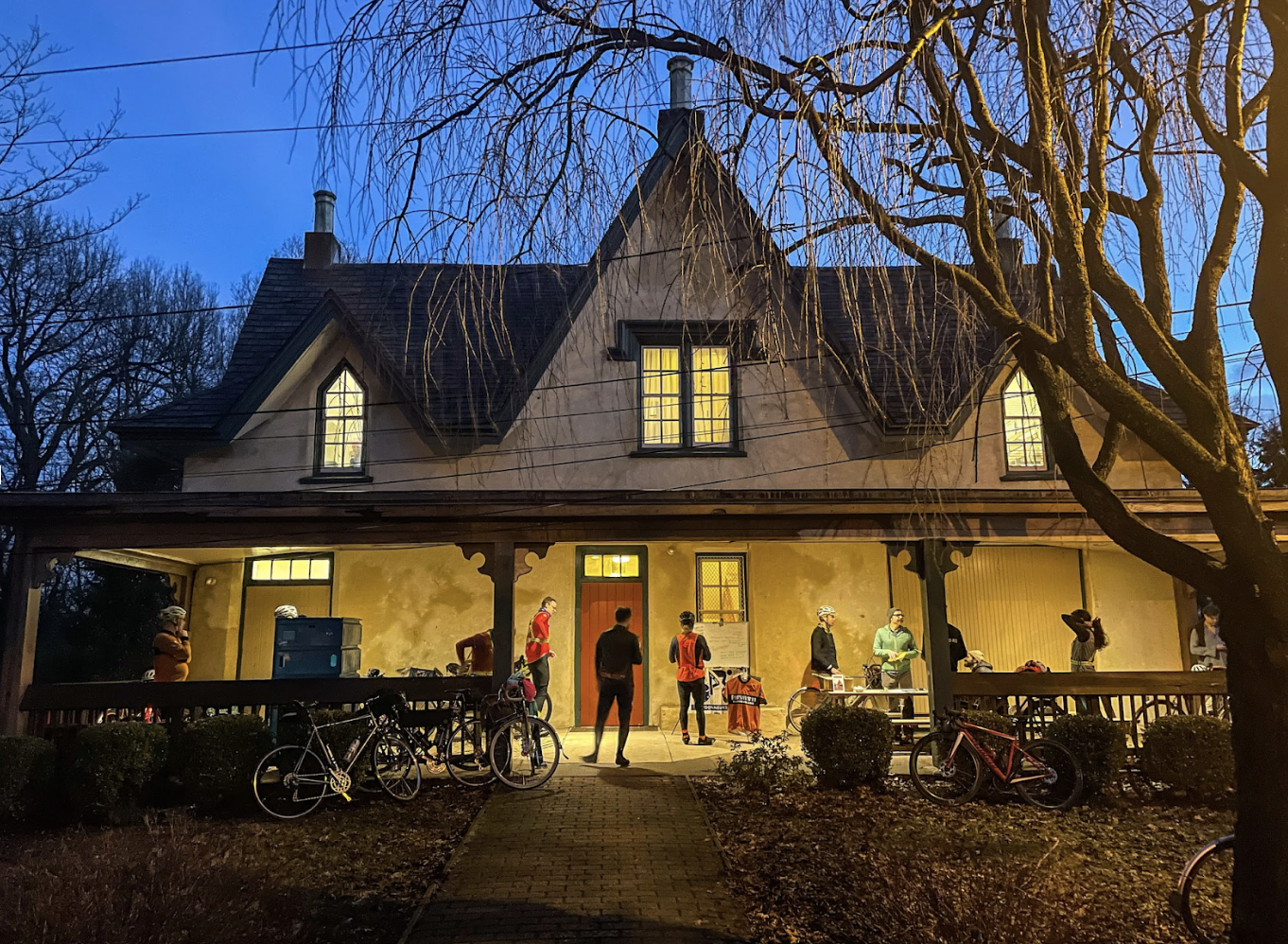
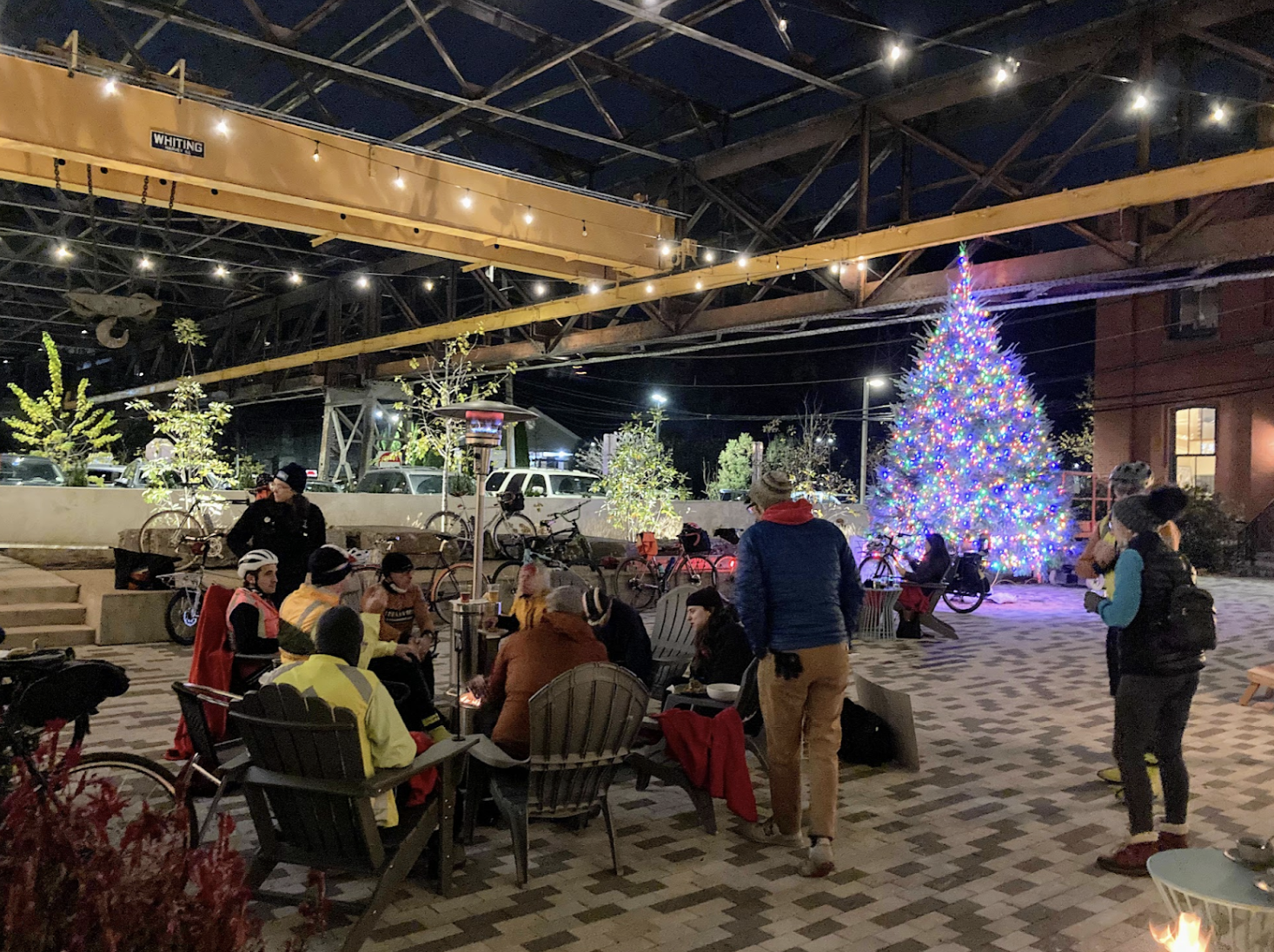
Chamounix Hostel (left); finish control at the Landing Kitchen (right)
Adventure-seekers of all levels are invited to take part. Even those unsure about riding are welcome to hang out at a finish control. It is an easy way to meet fellow randos, see a wide range of bike setups, and pick up practical tips and strategies for long rides. All series rides start and finish at the Chamounix Hostel in West Fairmount Park in Philadelphia, with the exception of the IWD 107K, which finishes at the Philly Bike Expo.
For more information about Pennsylvania Randonneur events and to register, visit PARando.org and check out the club blog. Reach out with questions anytime at rba@parando.org.
Note: A current Randonneur USA (RUSA) membership ($30/year) is required to register for any randonneuring event in the US. A PA Rando club membership is not required, but it comes with discounts on each PA Rando event.